
Last updated October 30, 2026
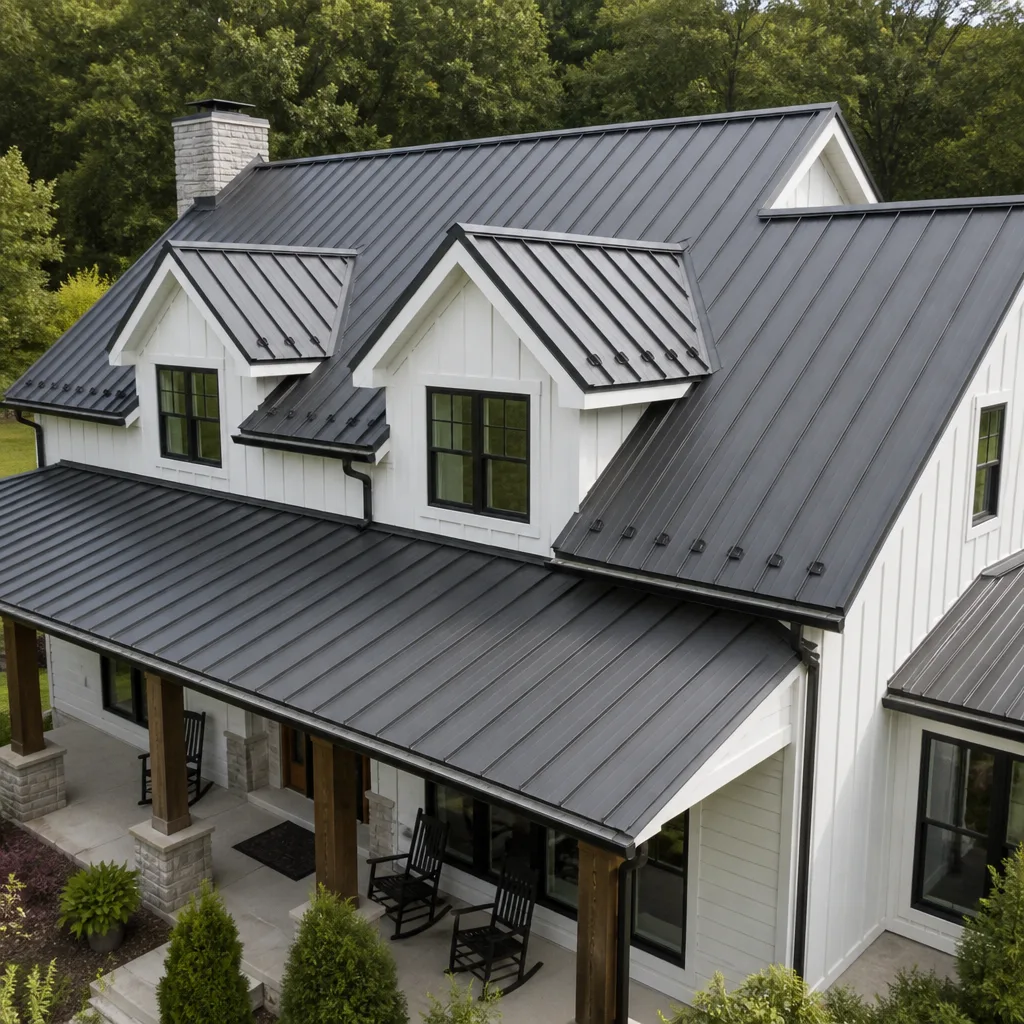 Metal roofing
 Architectural shingles
 Tile roofing
 GAF
 Owens Corning
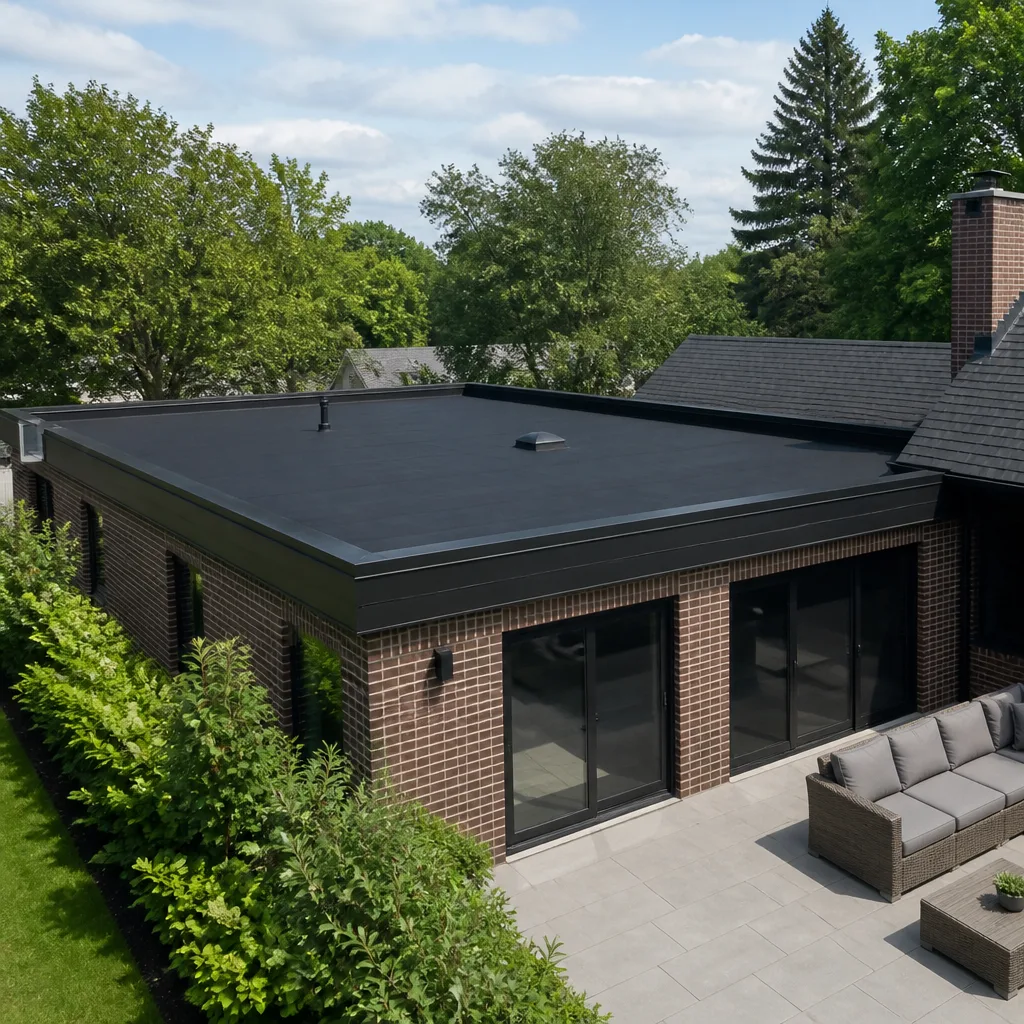 Flat & low-slope
Free roof inspection with deck photos before we talk money - GAF and Owens Corning certified installation
Roofing Emergency Preparedness Guide for Murrieta Homes
The most damaging thing that happens after a Murrieta storm isn’t the storm itself. It’s the 48 hours of unprotected exposure while a homeowner waits to figure out who to call, whether their insurance covers it, and what to do next. Water moves fast through a compromised roof. It finds the path of least resistance through your ceiling, down your walls, into your insulation, and by the time you’ve made three phone calls and checked your policy, the interior damage has multiplied. This guide is built for Murrieta homeowners who want to compress that window from two days to under two hours. You’ll learn exactly what to prepare before anything happens, what to do in the first hour after damage, how to navigate the insurance claim without getting shortchanged, and how to separate a legitimate emergency roofing response from the storm chasers who appear after every Santa Ana wind event.
Quick Answer
A roofing emergency in Murrieta happens in predictable windows: during Santa Ana wind season, after the first heavy rain of the year, and during wildfire ember exposure events. The prepared homeowner has their roof age, last inspection report, insurance policy number, and a trusted contractor’s contact saved before anything happens. In the first 24 hours after damage, the goal is temporary mitigation to stop water intrusion, thorough documentation for the insurance claim, and calling a roofing specialist who is not a storm chaser. Preparation reduces the exposure window from days to hours.
Styles & brands we work with
Table of Contents
- The Murrieta Emergency Calendar: Three High-Risk Windows
- Pre-Event Preparation: What to Have Ready Before Damage Happens
- The First Hour: Immediate Response Protocol
- Temporary Mitigation: What You Can Safely Do From the Ground
- Insurance Claims for Roofing Damage in Murrieta
- Avoiding Storm Chasers: Verifying Quality Under Time Pressure
- Post-Event Repair: From Tarp to Permanent Fix
- Common Mistakes to Avoid
- When to Call a Professional
- Frequently Asked Questions
The Murrieta Emergency Calendar: Three High-Risk Windows
Murrieta’s roofing emergencies do not distribute evenly across the year. They cluster in three predictable windows, and understanding why each one produces damage changes how you prepare. The city sits in the Temecula Valley, where hot, dry summers leave shingles brittle and sealants cracked. When the weather shifts, those weakened points fail. Here are the three periods when we see the highest volume of emergency calls in Murrieta.
Peak Santa Ana Season: October Through December
Santa Ana winds hit Murrieta from the northeast, funneling through the Santa Ana Mountains and the passes that frame the city. These winds regularly gust over 50 mph, and in the worst events we’ve seen sustained winds that lift shingles, tear flashing, and peel back ridge caps. The mechanism is simple: wind gets under a lifted edge and starts a progressive failure. One shingle lifts, then the next, and within hours a section of roof is exposed. Homes in the eastern foothill areas near Clinton Keith Road and Bear Creek tend to catch the strongest gusts, but no Murrieta neighborhood is immune.
Pre-event preparation: Book a Roof Inspection in Murrieta in September, before the wind season starts. The inspector will flag any shingles that are already lifting, any sealant that has cracked, and any flashing that is loose. Fixing those before October means the Santa Anas have nothing to grab.
First Significant Rain: November Through January
The first heavy rain after a long dry season is the single most common trigger for leak calls in Murrieta. Southern California roofs endure seven or eight months of heat and UV exposure without water. Sealants shrink and crack. Flashing pulls away from penetrations. Roof cement that looked fine in July is dust by December. When the first real storm arrives, water finds every one of those compromised points. Homeowners who had no idea anything was wrong suddenly have water in the living room. In our experience, the first storm of the season produces three to four times the call volume of any other single event on the Murrieta roofing calendar.
Pre-event preparation: Schedule your annual roof inspection before the rainy season, ideally in October. If you can’t get an inspection, do a ground-level visual check for missing granules, curled shingle edges, and cracked sealant around vents and pipes. If you see bare fiberglass or exposed felt, that’s the next leak.
Post-Wildfire Ember Exposure: May Through November
Murrieta sits in a wildfire-adapted landscape. The 2023 Highland Fire and nearby blazes have made ember exposure a real consideration for every homeowner in the valley. Wind-driven embers can travel a mile or more ahead of the fire front. They land in gutters packed with dry leaves, settle against the roof-to-wall intersections, and slip under loose shingles. The roof is the most vulnerable surface of your home during a wildfire event, and the damage may not be visible immediately. Embers that smolder in a gutter or against fascia can become a problem hours or days after the wind event.
Pre-event preparation: Keep gutters clean during fire season. Remove accumulated pine needles and leaves from the roof surface and valleys. Consider a roof inspection if your home has not been checked since the last significant fire event in the region. This is not about having a fireproof roof; it’s about removing the fuel that lets embers take hold.
Pre-Event Preparation: What to Have Ready Before Damage Happens
When a roofing emergency hits, the first 30 minutes determine how the next three weeks go. The homeowners who struggle most are not the ones with the worst damage. They’re the ones who spend the first hour after the storm looking for their insurance policy number, trying to remember when the roof was installed, and calling contractors they’ve never vetted. Here’s what to assemble now, before anything happens, so your immediate response is execution, not searching.
Your Emergency File
Create a single folder, physical or digital, that contains everything you need in the first hour after roof damage. This is the single highest-leverage preparation step for Murrieta homeowners. The file should contain:
- Roof age and installation date: If you don’t know when the roof was installed, get a Roof Inspection in Murrieta and ask the inspector to estimate the remaining service life. This matters for insurance claims.
- Last roof inspection report: Any documented issue, even a minor one, is useful when you file a claim. It shows the roof was maintained.
- Insurance policy number and declaration page: Keep the actual policy document, not just the phone number on the card.
- Contractor contact information: Having a roofing specialist already selected before the emergency removes the biggest source of delay and bad decisions.
- Photos of your roof in good condition: Take photos now, from the ground if necessary. These become the baseline for any damage claim.
Know Who You’re Going to Call
The worst time to vet a roofing contractor is during an emergency. You’re under time pressure, worried about water, and every contractor you call knows you’re vulnerable. That’s how Murrieta homeowners end up with sloppy tarp jobs and inflated emergency fees. Pick your roofing contractor before you need one. Look for a company that:
- Specializes exclusively in roofing, not a general contractor who does roofs on the side.
- Carries multiple major material brands, which signals established distributor relationships and real market presence.
- Provides written estimates with line-item detail, even for emergency work.
- Has a verifiable local presence in Murrieta, not just a phone number that routes to a call center.
The First Hour: Immediate Response Protocol
Damage has happened. Water is coming in, or the roof is exposed, or the wind has torn a section away. Here’s what to do in order, and why the order matters.
- Stop the water if you safely can. If water is actively entering the house, place a bucket or container under the leak. Move furniture and electronics out of the path of water. If the ceiling is bulging, poke a small hole to release the pooled water in a controlled spot, rather than letting the whole section give way unexpectedly. Caution: do this only if you can reach the bulge safely from inside. If the ceiling is sagging over a large area, evacuate that room.
- Photograph everything before you touch anything else. Insurance adjusters and roofing contractors need to see the damage as it exists on arrival. Take photos from inside and outside, from multiple angles. Document water stains, visible roof damage, and anything you moved. The more documentation you have before mitigation begins, the stronger your claim.
- Call your insurance company. Report the claim immediately, even if it’s after hours. Most insurers have 24/7 claim lines. Tell them what happened, when, and what you’ve observed. Do not speculate about what caused the damage beyond the observable facts. Do not say “it’s probably been leaking for months” unless you have documented evidence of that. The claim’s scope depends on what you say in this call, and adjusters listen carefully.
- Call your pre-selected roofing contractor. This is where the preparedness planning pays off. You’re not calling strangers. You’re calling the company you already vetted. Ask for an emergency tarp and temporary mitigation. In Murrieta, a roofing specialist who is already familiar with your property can respond faster and more precisely than a contractor who has to start from zero.
- Document the conversation and next steps. Write down the claim number, the adjuster’s name, and what was said. If the roofing contractor gives you a timeframe, write that down too. You’re going to need this paper trail when the settlement conversation starts.
Temporary Mitigation: What You Can Safely Do From the Ground
The goal of temporary mitigation is simple: stop water from getting in and doing more damage while professional help is on the way. It is not to fix the roof. The two most common calls we receive from Murrieta homeowners during an emergency are “what can I do right now?” and “should I get on the roof?” The answer to the second question is almost always no. Here’s what you can safely do from the ground, or from a ladder only to the eaves, while you wait for a professional response.
Ground-Level Actions
- Clear downspouts and the base of scuppers. If your roof has scuppers, the drains that channel water off a flat or low-slope section, make sure the exit path is clear. Debris blocking a scupper backs water up onto the roof and sends it inside.
- Relocate possessions. Move anything of value out of the path of water. That includes furniture, electronics, rugs, and documents. The roof will be repaired; the interior damage is what makes claims painful.
- Check the attic. If you have access to the attic and can do so safely, identify where water is entering. This helps the roofing contractor target the tarp and helps your insurance claim by establishing the entry point.
Eaves-Level Actions
- Clear gutters if debris is causing overflow. A ladder set to the eaves, not the roof, is the maximum height a homeowner should work at during an emergency. If a clogged gutter is sending water back under the eave and into the fascia, clearing the blockage can reduce active water intrusion.
- Apply a temporary sealant only if you can reach the point safely and the roof is dry. Emergency roof patch products exist for a reason, but they require a dry surface to bond. If the roof is wet and the wind is blowing, no temporary sealant will hold. And reaching the damaged point often requires getting onto the roof surface itself, which is not worth the risk in an emergency situation.
Do not climb onto a wet or wind-damaged roof. A roof that has already lost shingles or flashing is unsafe to walk on. The sheathing may be saturated. The roof slope may be slicker than it looks. Falls from roofs are among the most serious injuries a homeowner can suffer, and the risk is entirely avoidable. Let the tarp and the permanent repair be done by someone whose job is being on roofs safely.
Insurance Claims for Roofing Damage in Murrieta
Roof insurance claims in California are different than they were a decade ago. Carriers have narrowed coverage, increased deductibles, and become more aggressive about denying or minimizing roof claims. Murrieta homeowners who approach a claim without preparation routinely leave money on the table or accept a settlement that doesn’t cover the actual cost of repair. Here’s how to avoid that.
Documentation in the First 24 Hours
What you document in the first day after damage largely determines the outcome of the claim. Gather the following before the adjuster arrives:
- Date-stamped photos of exterior damage from multiple angles, including close-ups of the specific points where shingles, flashing, or tiles are compromised.
- Interior evidence of water intrusion: water stains on ceilings, walls, and floors, with measurements of the affected area.
- The exact time of the event: storms, wind events, and rain are matters of record. When your roof was damaged matters for the claim.
- Your pre-existing roof documentation: the inspection report and good-condition photos from your emergency file.
- Any receipts from emergency mitigation: tarps, buckets, patching materials, or professional mitigation services already performed.
What to Avoid Saying to Adjusters
Adjusters are not on your side or against you; they are on the insurance company’s side, and their job is to settle the claim for as little as the policy allows. What you say in the first conversation shapes the claim file. Avoid these statements:
- “The roof is old anyway.” Roof age matters to a claim, but positioning your roof as old before the adjuster does their own evaluation hands them an argument for depreciation. Let the facts speak.
- “It’s probably been leaking for a while.” This converts an acute, covered event into a maintenance issue, which may not be covered. Only provide documented facts: when you first observed the problem and what you observed.
- “I’m not sure what caused it.” The more specific you are about the event, the harder it is to classify the damage as wear and tear. “The wind lifted shingles on the west slope during Tuesday’s Santa Ana event” is specific and useful. “I don’t know what happened” opens the door to denial.
Independent Inspection Before Settlement
Insurance company adjusters do not work for you. Before you accept any settlement offer, get an independent opinion from a roofing contractor who works for the homeowner’s interest, not the carrier’s. A Roof Inspection in Murrieta after a damage event gives you documented third-party evidence of what actually needs to be repaired or replaced. If the adjuster’s scope of work is lower than the inspector’s, you now have the basis for a supplement. This is especially important for hidden damage that adjusters miss on quick visits: cracked decking, compromised underlayment, and moisture trapped between layers.
Avoiding Storm Chasers: Verifying Quality Under Time Pressure
Every significant wind event in Murrieta brings the same parade: out-of-state crews who roll into town, knock on doors with offers of “free inspections,” and disappear as soon as the checks clear. They’re called storm chasers, and they operate on a simple formula: the homeowner is stressed, the insurance check is coming, and speed matters more than reputation. You can filter them out in minutes with a few pointed questions.
The Five-Minute Filter
- Do they have a physical presence in Murrieta? A local address and a track record in the community matter. If the company can’t name Murrieta neighborhoods or reference local permit processes, that’s a red flag. Rosewood Roof Repair has been serving Murrieta homeowners specifically, not parachuting in for storm work.
- Are they a roofing specialist or a general contractor? Storm chasers often present as general contractors who happen to be doing roofs this week. A dedicated roofing company offers roof repair in Murrieta as a core service, not an opportunistic sideline.
- Which material brands do they carry? Legitimate roofing companies have relationships with major manufacturers. If the contractor can only offer one brand or can’t tell you which manufacturers they’re certified with, that’s the chaser profile. Companies with access to multiple brands, like GAF and CertainTeed, are established enough to maintain those partnerships.
- Will they provide a written, line-item estimate before work begins? Chasers want verbal agreements and fast starts. A written estimate that breaks down scope, materials, and price is the hallmark of a contractor who expects to stand behind the work.
- Can they wait? This sounds odd during an emergency, but it’s the strongest filter. A legitimate contractor can tarp your roof, stop the bleeding, and then give you time to make a sound decision. The chaser wants the full replacement contracted immediately, before you can get a second opinion or your adjuster has finished their evaluation.
Post-Event Repair: From Tarp to Permanent Fix
Once the immediate emergency is contained and the claim is filed, the work of restoring your roof properly begins. This is where the quality of your original contractor selection shows up. The tarp is a temporary measure, not a repair. In Murrieta’s climate, a tarp can stay secure for days or weeks, but it is not a solution. The sequence from emergency to resolution looks like this:
Damage Assessment and Scope of Repair
After the tarp is up and the immediate risk is addressed, the roofing contractor performs a full assessment. This is not the same as the initial emergency response. The initial response is about stopping water. The assessment is about determining what actually needs to happen. During this phase, the contractor identifies:
- The full extent of wind damage, including spots that are not visible from the ground.
- Whether the underlayment or decking is compromised, not just the surface shingles.
- Whether the damage is repairable in place or requires section replacement.
- What the permanent repair will cost and how long it will take.
At this point, the homeowner has a decision point: repair or full replacement. If the roof is past the midpoint of its service life or the damage is extensive enough, a Roof Replacement in Murrieta may be the more cost-effective long-term solution. A roofing specialist who handles both repair and replacement can give you a straight answer on which one is right, because the company is not trying to steer you toward whichever option has the higher margin. The answer depends on the roof, not the contractor’s preferences.
Material Selection Without the Pressure
If replacement is the right call, you should not be limited to whatever brand the contractor happens to stock. A contractor with a broad material portfolio gives you the ability to balance cost, longevity, and warranty coverage. In Murrieta, where summer heat and UV are the primary long-term stressors on a roof, material choice matters. Premium lines from Atlas and Boral are built for the Southern California climate, while value-oriented options from Tamko still offer real performance at a lower price point. The point is choice: the right material for your roof, not the one that happens to be in the truck.
Common Mistakes to Avoid
These are the recurring missteps we see from Murrieta homeowners during and after roofing emergencies. Each one is avoidable, and each one costs money.
- Waiting to file the insurance claim. Carriers have deadlines for filing claims, and the longer you wait, the harder it is to link the damage to the specified event. File the claim in the first 24 hours, even if the full extent of damage is not yet known.
- Getting on the roof during or immediately after a storm. Wet tile and shingle roofs have the traction of ice. The emergency is not made better by adding a fall injury on top of a damaged roof. Stay off the roof.
- Accepting the first settlement offer without an independent inspection. Adjusters often miss damage that is not visible on a quick visit. Get your own inspection before you agree to anything.
- Hiring the first contractor who knocks on the door. Storm chasers canvass Murrieta neighborhoods after every wind event. The urgency they create is a sales tactic, not a safety consideration. A legitimate contractor can tarp first and talk later.
- Treating a tarp as a repair. Tarps are temporary. They buy time. They do not restore the roof, and leaving one in place for months invites further damage and potential coverage issues.
- Not documenting the pre-event condition of the roof. If you have no photos and no inspection report from before the storm, the insurance company’s default assumption is that the damage existed before the event. Document before you need the documentation.
When to Call a Professional
During any event where the roof has visibly lost material, water is entering the interior, or you are uncertain whether the structural integrity of the roof has been compromised, a professional roofing response is required. This is not a DIY situation. The risk of falls, the complexity of insurance claims, and the long-term consequences of an improperly mitigated roof all point in the same direction. Rosewood Roof Repair offers free estimates in Murrieta, and we recommend calling (844) 900-4167 before the emergency happens, so you have the number ready when you need it. We specialize exclusively in roofing, with experience across repair, replacement, and inspection, and we carry a material portfolio that includes GAF, Atlas, Tamko, and Boral products, among others. The warranty terms are product- and manufacturer-dependent and should be confirmed at the time of estimate.
Frequently Asked Questions
Stop active water intrusion with buckets or by moving possessions out of the path, photograph everything before you touch anything, call your insurance company to file the claim, and then call your pre-selected roofing contractor for emergency tarp and mitigation. The order matters: documentation before alteration, claim before repair. Rosewood Roof Repair can walk you through the sequence at (844) 900-4167.
Emergency tarp and temporary mitigation in Murrieta typically ranges from $300 to $600, depending on the roof size and the complexity of the tarp placement. Permanent repair costs range widely based on the extent of damage, from a few hundred dollars for isolated shingle replacement to $12,000 or more for a full roof replacement. Call (844) 900-4167 for an exact quote, which is always free.
Most California homeowners insurance policies cover wind damage as a named peril, but the details matter: your deductible, whether the roof is subject to actual cash value or replacement cost coverage, and whether the carrier determines the damage was caused by the wind event or by pre-existing wear. Documentation of the specific event and a pre-event inspection report both strengthen the claim significantly.
A properly installed emergency tarp can stay in place for several weeks to a few months, depending on the quality of the installation and the weather. Murrieta’s summer heat accelerates deterioration of the tarp material, so if the tarp is installed during hot months, schedule the permanent repair sooner rather than later. A tarp is a bridge, not a destination.
Storm chasers typically appear after significant weather events, operate out of state or with no local address, carry only one material brand or none at all, pressure the homeowner for an immediate full-replacement contract, and disappear once the work is done. A legitimate Murrieta roofing contractor has a local presence, a track record, written estimates, and the ability to tarp now and talk later.
If the roof is past the midpoint of its expected service life, if the storm damage is widespread across multiple sections, or if the underlayment and decking are compromised in addition to the surface material, replacement is often the more cost-effective long-term decision. A Roof Inspection in Murrieta after the event gives you the factual basis for this decision. Repairs address the damage; replacement addresses the roof.
The Bottom Line
Roofing emergencies in Murrieta are predictable. The Santa Anas will return in the fall. The first heavy rain will find every weak point that the dry season created. Wildfire ember exposure will remain a seasonal consideration for every home in the valley. The homeowner who understands the calendar, prepares an emergency file, pre-selects a roofing contractor, and knows the insurance claim process before the event happens will always come out ahead of the homeowner who reacts in the moment. The 48-hour exposure window that follows most roofing emergencies is entirely controllable. Compress it to two hours and you’ve already won the hardest part of the battle. For Murrieta homeowners who want a roofing specialist on call before the next event, Rosewood Roof Repair provides free estimates and a full range of roof repair, replacement, and inspection services at (844) 900-4167.
Written by the team at Rosewood Roof Repair, serving Murrieta since 2014.
See the difference
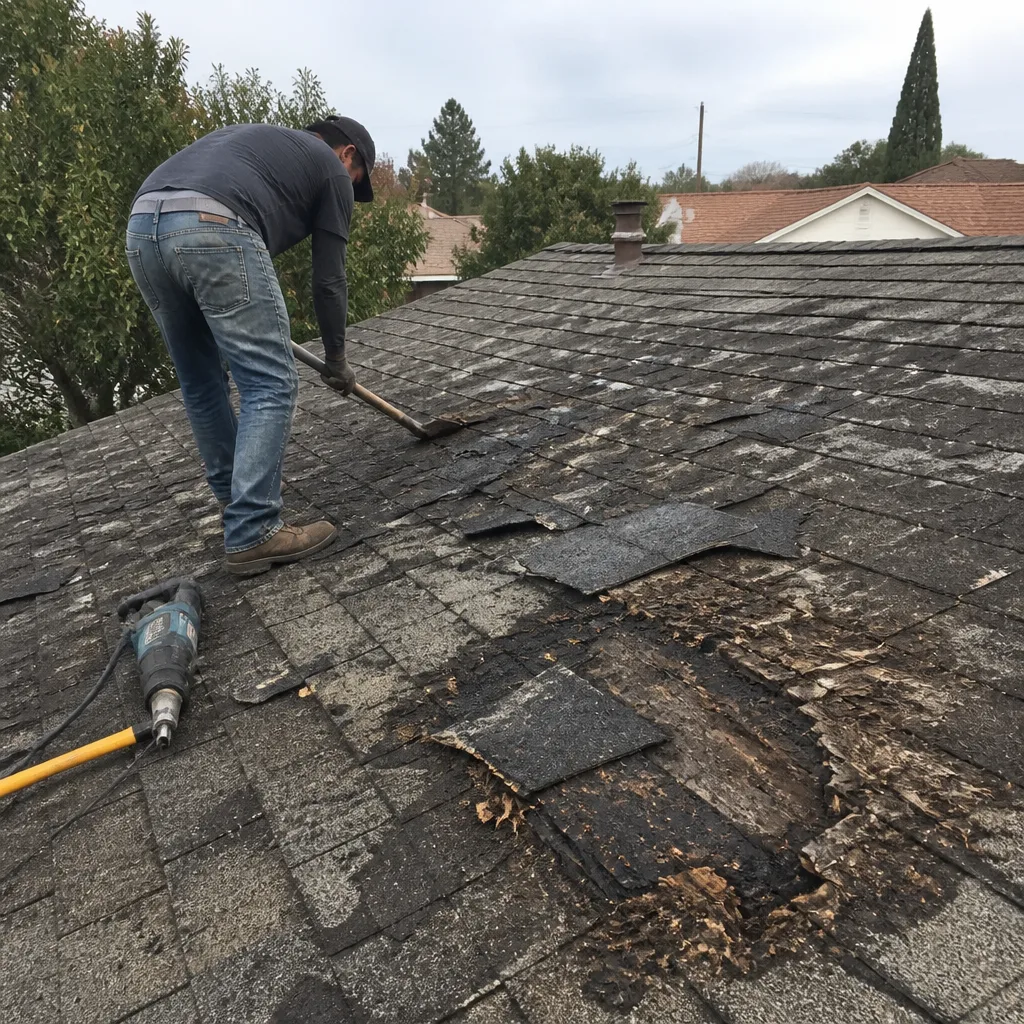 Before
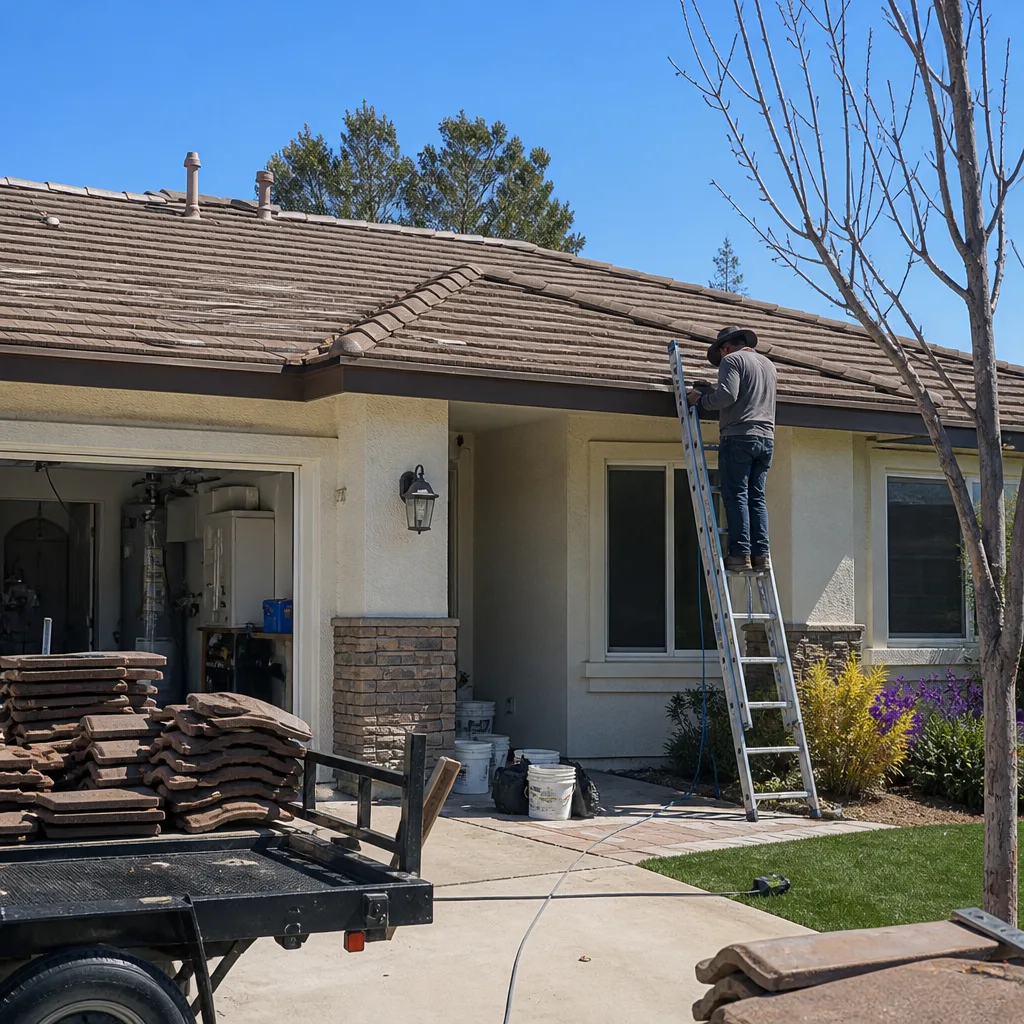 After
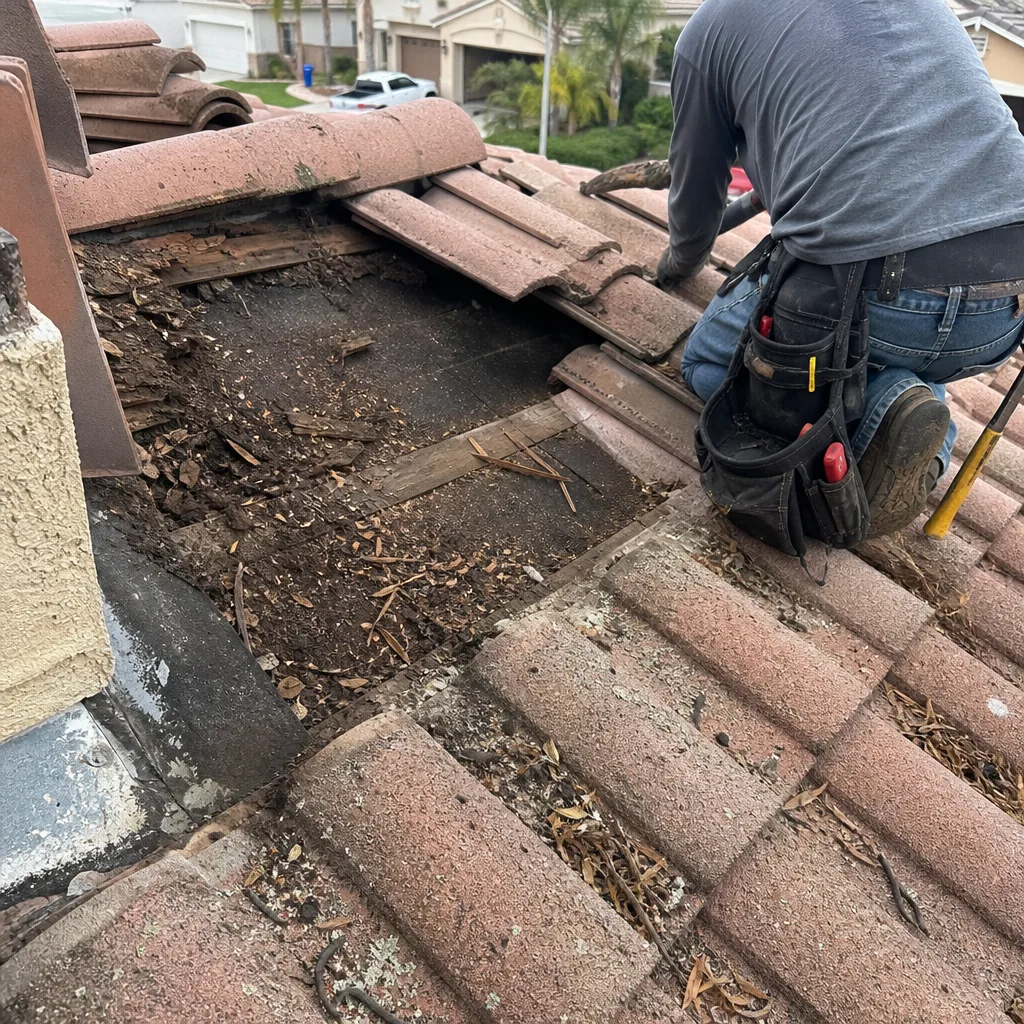 Before
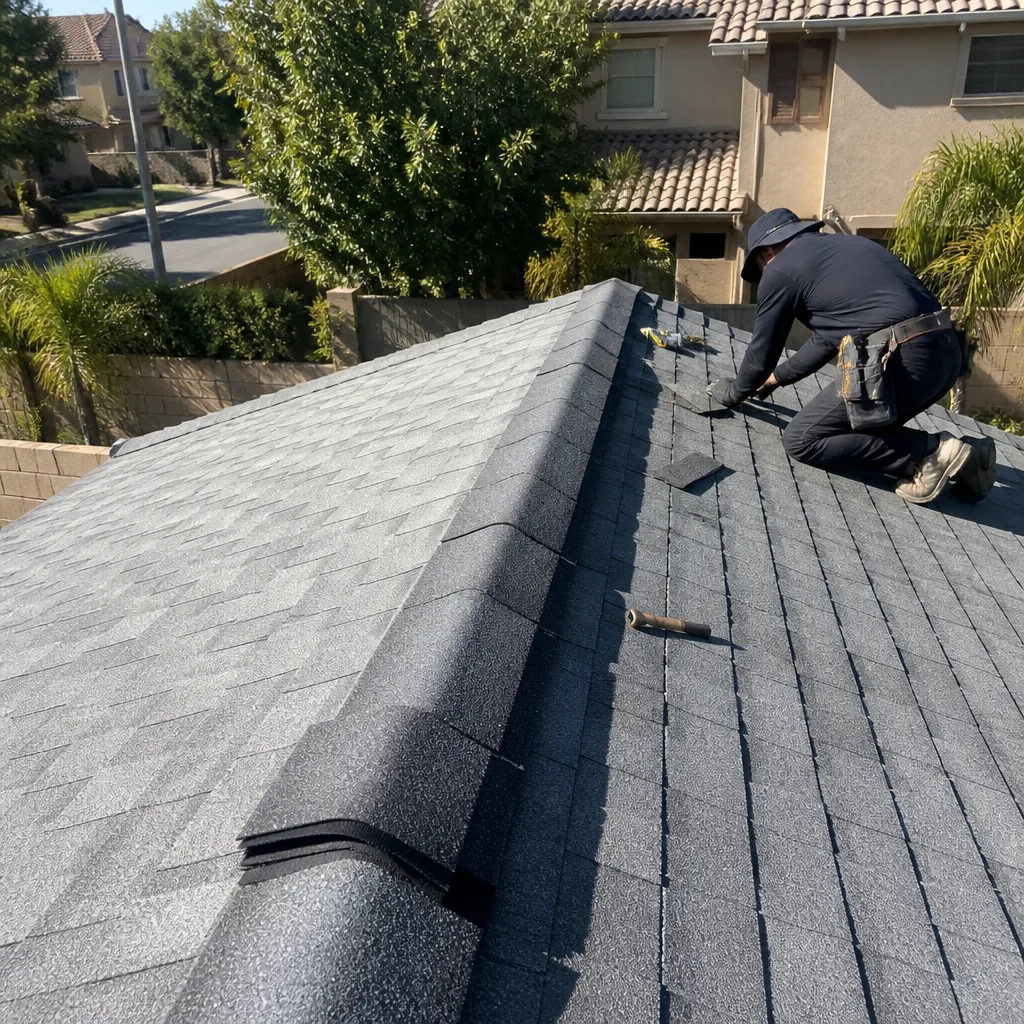 After
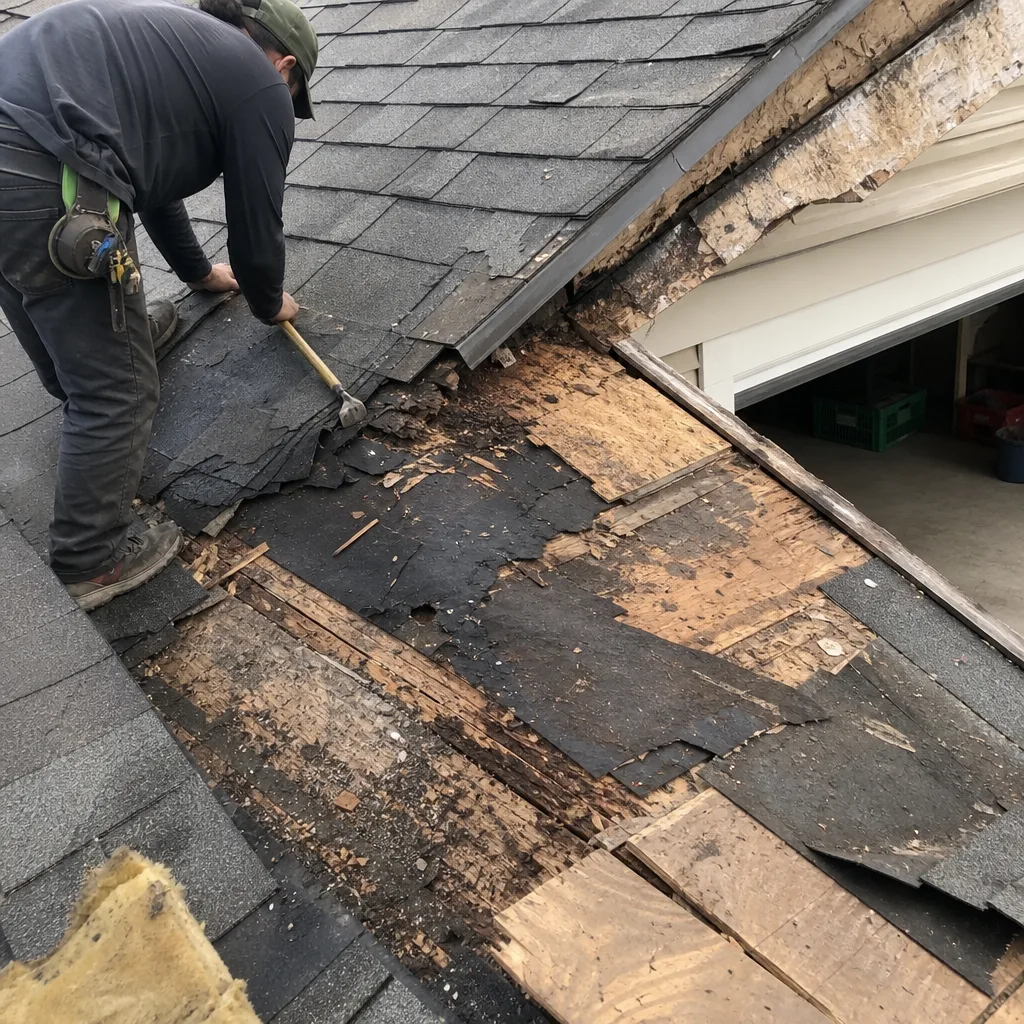 Before
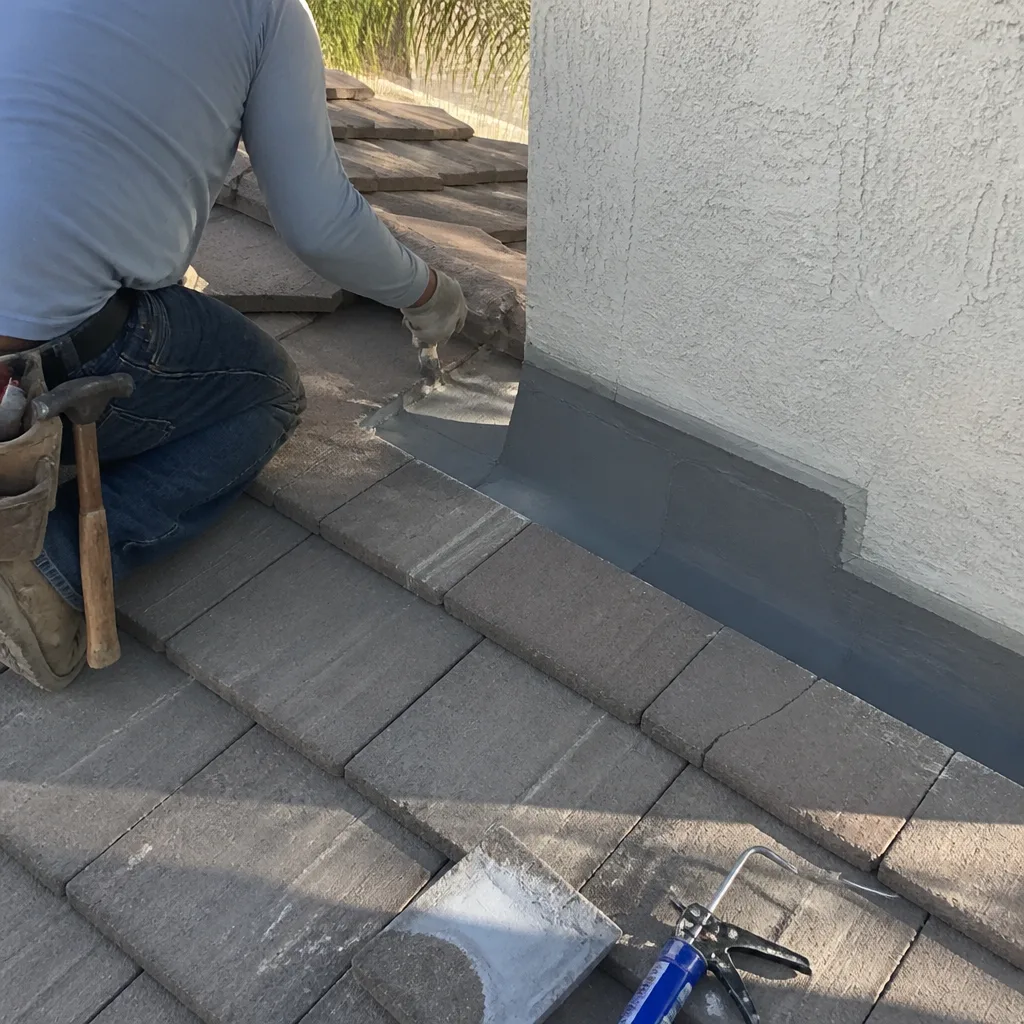 After