
Last updated October 30, 2026
 Metal roofing
 Architectural shingles
 Tile roofing
 GAF
 Owens Corning
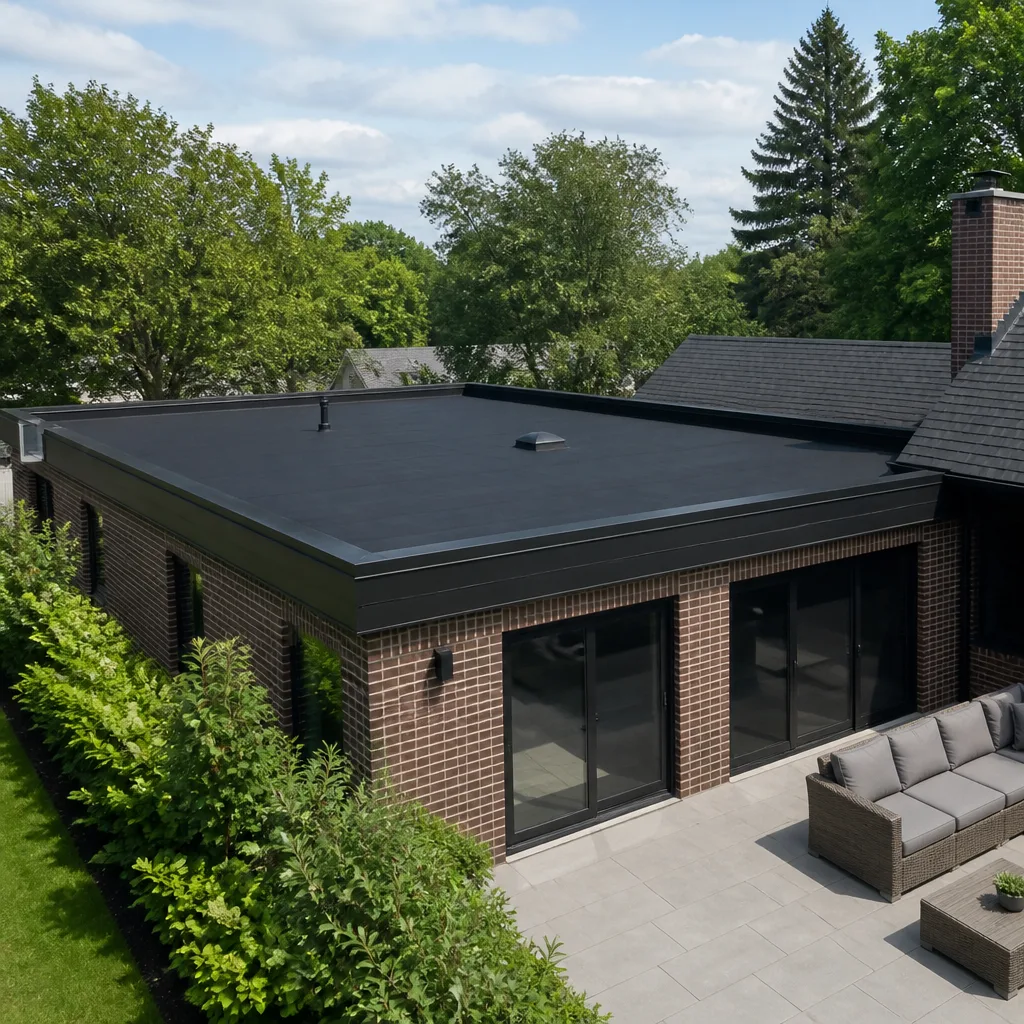 Flat & low-slope
Free roof inspection with deck photos before we talk money - GAF and Owens Corning certified installation
Roofing Warning Signs: A Murrieta Homeowner’s Reference Guide
A dark stain on your ceiling isn’t a roofing emergency. It’s a roofing record. The leak that caused it may have been active for months, which means the damage is already done, but the repair window hasn’t closed yet. What you do in the next 30 days determines whether this is a $400 fix or a $4,000 one. This guide is written for Murrieta homeowners who want to understand what their roof is telling them, when to act, and when to simply watch and document. We’ll cover the warning signs most guides miss, including several specific to Southern California’s inland climate and the Spanish-style architecture common throughout Murrieta’s neighborhoods.
Quick Answer
Roof warning signs fall into three tiers: same-week issues (active leaks, visible daylight through the deck, missing tiles after wind), this-season issues (granule accumulation in gutters, cracked flashing, minor tile shifts), and document-and-monitor issues (early granule loss, hairline tile cracks, light surface rust). In Murrieta’s dry, UV-intense climate, granule loss and tile deterioration from thermal cycling are more common warning signs than storm damage. Knowing which tier a problem falls into prevents both panic-driven overspending and complacency-driven structural damage.
Styles & brands we work with
Table of Contents
- The Three-Tier Warning Sign System
- Interior Warning Signs: How to Read Stains, Moisture, and Peeling Paint
- Murrieta-Specific Warning Signs Other Guides Miss
- Tile Roof Warning Signs on Spanish-Style Homes
- How to Photograph and Document Warning Signs Correctly
- Warning Signs and What They Mean for Repair Costs
- Common Mistakes to Avoid
- When to Call a Professional
- Frequently Asked Questions
The Three-Tier Warning Sign System
Most roofing guides treat every warning sign with the same urgency. That approach fails homeowners in two directions: it creates panic over cosmetic issues that can wait, and it breeds complacency about slow-moving damage that compounds quietly. Here’s how we classify warning signs on Murrieta homes, based on what we’ve seen across hundreds of inspections.
Tier 1: Same-Week Attention (Act Within 7 Days)
Active water intrusion. Water actively entering your home is never a wait-and-see situation. This includes dripping from the ceiling during rain, water stains that grow or darken between storms, or damp insulation in the attic after a rain event.
Visible daylight through the roof deck. If you can see light coming through the boards from inside your attic, that’s a direct path for water, pests, and hot air. This often indicates a displaced tile, cracked underlayment, or failed flashing at a penetration point.
Missing or displaced tiles after wind events. Murrieta sits inland enough to avoid the worst coastal storm patterns, but Santa Ana wind events in fall and early winter can lift tiles. A single missing tile exposes the underlayment, and once that underlayment gets UV exposure, it degrades within weeks.
Flashing separation at chimneys, skylights, or roof-to-wall transitions. Flashing is the most failure-prone component on any roof. When it separates from the surface it’s supposed to protect, water gets in behind it every time it rains.
Sagging roof plane visible from the street. A dip in the roofline that was not there before indicates structural compromise, often from prolonged moisture exposure of the deck. This is not a repair, it’s an emergency evaluation.
Tier 2: This-Season Attention (Act Within 90 Days)
Granule accumulation in gutters or at downspout bases. This is the warning sign we’ll focus on extensively below because it’s the most misread signal in Murrieta. Granule loss means the shingle’s UV protection is failing, and in a climate with 275+ sunny days a year, that degradation accelerates fast.
Cracked or curling shingle edges visible from the ground or a ladder. Shingles that curl show that the adhesive strip has failed and the material is drying out. Cracks indicate the shingle can no longer flex with thermal expansion.
Mortar erosion at tile ridges and hips. On Murrieta’s many Spanish-style and Mediterranean homes, the mortar that caps ridges and hips erodes slowly from wind-driven dust and rain. When the mortar crumbles, the ridge tiles loosen, and the next wind event can remove them entirely.
Rust at flashing or vent pipes. Surface rust is cosmetic. Rust that has pitted the metal is structural. The distinction matters because the fix is dramatically different: cleaning and sealing versus cutting out and replacing.
Daylight visible at roof edge or eave gaps. Gaps between the deck and the drip edge allow wind-driven rain to reach the fascia and eave. In dry-climate Murrieta, this issue often goes unnoticed because rain events are infrequent, but a single heavy winter storm can cause visible damage.
Tier 3: Document and Monitor (6-12 Month Reassessment)
Early granule loss with no underlying mat exposure. Bare shingle mat (the fiberglass layer under the granules) is Tier 2. Surface texture that’s less “sandy” than when installed, but still covers the mat, is Tier 3. Document with photos, note the date, reassess at the end of summer.
Hairline cracks in tile with no displacement. Concrete and clay tiles develop surface cracks from thermal cycling. If the crack doesn’t extend through the tile and the tile hasn’t shifted, the roof is still performing. Monitor annually.
Light lichen or moss growth on north-facing roof planes. Murrieta’s dry climate rarely produces significant moss, but shaded areas near Santa Rosa Plateau or along canyon-adjacent lots can accumulate biological growth. Early growth is monitor-only. Anything covering more than 10% of a plane warrants cleaning by a professional.
Slight granule staining on driveway or walkways after heavy rain. Some granule shed during a roofline’s first year of service and during heavy rain years. The question is volume: a light dusting is normal, a visible layer with bare spots on shingles is not.
Interior Warning Signs: How to Read Stains, Moisture, and Peeling Paint
Interior signs look similar but point to different failure points. Learning to read them saves diagnostic time and keeps you from fixing the wrong thing.
Ceiling Stains: Location Is Everything
A ceiling stain is the most common first sign of a roof problem, but not every ceiling stain comes from the roof. Here’s how to tell them apart:
- Center-of-room stain near a ceiling fan or light fixture: Often indicates a leak at a plumbing vent pipe or roof penetration above, not necessarily a widespread roof failure. Water follows the path of least resistance, typically along a pipe or wire.
- Stain at the junction of wall and ceiling on an exterior wall: Points to flashing failure at the roof-to-wall transition. Water is entering where the roof plane meets the vertical wall surface.
- Stain near a chimney: Chimney flashing leaks are common and often independent of the roof field’s condition. Repair may involve only the flashing, not the roof itself.
- Multiple stains across a wide ceiling area: Suggests underlayment failure or a roof section that’s reached the end of its service life, allowing water through in multiple places.
Attic Moisture: Condensation vs. Leak
Murrieta homeowners often find moisture in the attic and assume a leak. Before calling a roofer, check for condensation first. Condensation forms on nails, vent pipes, and the underside of the deck when warm, moist air from the living space rises into a cold attic. This is a ventilation issue, not a roofing leak. The telltale signs of condensation are widespread, uniform moisture on metal fasteners and sheeting, versus a leak, which produces localized staining and a discernible water path.
Peeling Paint at Eaves
Peeling exterior paint along eaves and fascia often signals water wicking behind the gutter or dripping off the roof edge. In Murrieta, where wood-framed eave structures are common on older homes in the historic downtown core and on ranch-style homes throughout the city, this peeling is not just cosmetic. It’s evidence of repeated wetting, which leads to rot. Investigate whether the gutter system is sized correctly and whether drip edge is present. Without drip edge, water wraps under the shingle and contacts the wood directly.
Murrieta-Specific Warning Signs Other Guides Miss
Most roofing guides are written for a general audience. Here are the warning signs specific to Murrieta’s climate and housing stock that we encounter regularly.
Granule Accumulation in Gutters During Dry Season
This is the big one. In most of the country, granule loss in gutters is a storm signal: hail damage, wind-driven rain, impact from debris. In Murrieta, where we can go months without measurable rain, finding a layer of granules in dry gutters is a different warning entirely. It means the shingles are shedding granules from UV degradation and thermal cycling, not from impact. The asphalt layer is drying out, losing its bond with the ceramic granules, and the shingle’s protective surface is failing from the top down.
This distinction matters because of what it means for repair strategy. Storm-driven granule loss often indicates a discrete event, and if the shingles are young enough, repair of specific areas may be appropriate. UV-driven granule loss indicates a roof that’s aging out, regardless of its calendar age. A 20-year-old architectural shingle that’s been baked by Murrieta sun for two decades may be functionally equivalent to a 25-year-old shingle in a coastal climate.
Thermal Cracking on South and West-Facing Planes
Murrieta’s summer temperatures routinely exceed 95°F, and rooftop temperatures run 50 to 60 degrees hotter. Shingles on south and west-facing planes experience the most thermal stress. If you’re seeing cracks and granule loss concentrated on those exposures while north and east planes look healthy, the problem is solar degradation, not product failure. This distribution pattern tells you the roof is aging unevenly, which matters when deciding between repair and replacement.
Dust and Debris Accumulation in Roof Valleys
Murrieta’s dry climate produces fine, wind-blown dust that accumulates in roof valleys where two planes meet. Over time, this dust forms a layer that holds moisture when it does rain, and that moisture sits against the valley metal or shingles for days. The result is accelerated corrosion or shingle deterioration in valleys specifically. Homes near the open areas east of the 215 corridor or along Clinton Keith Road experience more of this than homes in established, tree-lined neighborhoods. Clean valleys annually, or have them cleaned as part of a Roof Inspection in Murrieta.
Wildfire Ember Damage to Soft Materials
Murrieta sits in a high-risk wildfire zone, bordered by open chaparral. During red flag conditions, wind-borne embers can travel significant distances. Embers melt through the exposed edges of asphalt shingles and can smolder in accumulated leaf litter at roof intersections. Warning signs include small burn marks or melted spots on shingle edges, singed areas near dormers, and ember-caused pinholes in the underlayment that go unnoticed until leak testing reveals them. After any wildfire event within 10 miles, schedule an inspection even if your home was not directly threatened.
Tile Roof Warning Signs on Spanish-Style Homes
Murrieta has a high concentration of Spanish-style and Mediterranean homes with concrete or clay tile roofing. These roofs function differently from composition shingle roofs, and they fail differently too. Here’s what to look for.
Hairline Cracks in Tile Bodies
Concrete tile develops hairline cracks from thermal cycling: the expansion and contraction that happens every day as the roof heats and cools. A hairline crack in a tile body, with no displacement, is usually a monitor-only situation. The tile is still shedding water, and the underlayment below is still providing the primary waterproofing. The crack becomes actionable when it widens, when the tile shifts, or when the surface begins spalling (flaking away). Hairline cracks are most common on tile installed before 1995, when manufacturing standards allowed for less flexibility in the material mix.
Mortar Erosion at Ridges and Hips
The ridge and hip tiles on Spanish-style roofs are set in mortar, and that mortar is the most weather-exposed component of the system. Murrieta’s dry conditions mean the mortar erodes gradually: wind-blown sand and dust abrade the surface, and infrequent rain dissolves the binding agents. When mortar recedes significantly, the ridge tiles loosen. The next strong wind event lifts them, and then you have displaced ridge tiles and exposed underlayment at the highest point of the roof. Catch this early by checking ridge lines from the ground with binoculars once a year. If the mortar looks recessed or fractured, have it repointed before the tiles lift.
Shifted Tiles After Thermal Cycling
Tile roofs in Murrieta respond to temperature swings differently than shingle roofs. Individual tiles expand and contract at different rates depending on their orientation, material, and whether they’re in direct sun or shaded. This differential movement can cause tiles to shift horizontally along the batten, especially on older installations where tile locks or fasteners have worn. A shifted tile that leaves a visible gap in the roof plane is a water entry point. The fix may be simple: reseating the tile. But repeated shifting indicates the underlayment has degraded to the point where the tile is no longer sitting flush.
Broken Tiles from Foot Traffic
Tile roofs are not walkable in the same way composition shingles are. Every step concentrates weight on a small area, and concrete tile fractures under point load. If you’ve had satellite dishes installed, HVAC service performed, or chimney cleaning conducted with workers accessing the roof, check for broken tiles in the access path. The damage is not immediately visible from the ground, but it creates channels for water to reach the underlayment. On Roof Repair in Murrieta jobs, broken tiles from prior foot traffic are among the most common discoveries.
How to Photograph and Document Warning Signs Correctly
Documentation serves two purposes: it creates a record for future comparison, and it gives a contractor useful information before their first visit. But most homeowner photos are not useful. Here’s how to take photos that actually help.
Step 1: Capture Context First
Start with wide shots that show the warning sign in relation to the roof and house. Stand far enough back that the photo shows the slope where the issue is located, the roof penetration (if any), and the relationship to the building. These context shots tell the contractor which plane of the roof they’re looking at, which matters when orienting on-site. Use landmarks that never change: the chimney, a specific skylight, a dormer.
Step 2: Move Closer for Detail
After context, capture the specific warning sign at close range. Fill the frame with the damaged shingle, cracked tile, rusted flashing, or granule pile. The photo should show the texture and extent of the problem, not just that it exists. For cracks, angle the camera to show how deep the crack penetrates. For granule loss, photograph the area from directly above so the granule density on the shingle surface is visible.
Step 3: Include Scale
Every close-up photo needs a scale reference. A coin, a pencil, or even a standard sheet of paper placed next to the warning sign gives your contractor an immediate sense of size. A crack that looks catastrophic in a macro photo may be a half-inch surface hairline. A granule pile that looks modest may actually be a six-inch accumulation. Scale prevents misdiagnosis from photos alone.
Step 4: Use Morning or Late Afternoon Light
Murrieta’s midday sun flattens texture and creates glare on roofing materials. Photograph in the early morning or late afternoon, when the sun is at an angle. Side lighting reveals depth in cracks and granule loss, making the damage visible rather than camouflaged by harsh overhead light. On tile roofs, late afternoon light raking across the tile face reveals hairline cracks that are invisible at noon.
Step 5: Label Each Photo with Date, Location, and Weather
Every photo set should include the date and the weather conditions at the time. Knowing whether rain fell just before granule accumulation was observed, or whether a Santa Ana wind event preceded tile displacement, changes the diagnostic picture. Keep the photos organized in a folder by year. When you call us for a Roof Inspection in Murrieta, having this record available makes the inspection more efficient.
Reassess the same warning signs at six and twelve months using the same angles and lighting conditions. The comparison, not the single snapshot, is what tells you whether the issue is progressing or stable.
Warning Signs and What They Mean for Repair Costs
Every warning sign carries a cost implication, and the relationship is rarely linear. Here’s what Murrieta homeowners should expect, based on the symptoms described in this guide. Keep in mind that pricing varies with roof size, slope, material, and access, and these ranges are estimates for planning purposes, not quotes.
Repair Cost Ranges by Warning Sign in Murrieta
- Chimney or skylight flashing repair: $250 to $700. This is the most common repair on Murrieta homes and the least invasive. Often completed same-day.
- Small patch repair at a single penetration (vent pipe, plumbing stack): $300 to $600. Includes removing and replacing shingles or tile, repairing underlayment, and resealing.
- Ridge or hip mortar repointing (tile roofs): $450 to $1,200. Labor-intensive because it requires access across the ridge line and careful mortar removal and replacement.
- Underlayment replacement under shifted or broken tiles: $800 to $2,500 depending on the area. More involved than shingle repair because each tile must be removed and reset.
- Localized granule loss repair (small shingle section): $350 to $800. Only feasible if matching shingles are available, which is not guaranteed for older roofs.
- Roof valley cleaning and repair: $300 to $900. Includes debris removal, inspecting valley flashing, and resealing where needed.
- Full roof replacement (if required, not a repair): Varies widely based on material choice and roof complexity. A Roof Replacement in Murrieta estimate from us always includes a written, line-item quote so you know exactly where your money goes.
What Increases the Cost
Murrieta’s housing stock varies from 1980s ranch homes with simple gable roofs to newer hillside homes with complex rooflines, multiple valleys, and steep pitches. Access matters: second-story roofs, tile roofs that require lift access, and homes with limited staging areas all add to labor costs. Material matching also matters: a 15-year-old shingle color may be discontinued, requiring a full-plane replacement to maintain appearance, even if only a small area is damaged. And for tile roofs, sourcing matching tile from boneyards or custom manufacturers adds time and cost.
Common Mistakes to Avoid
- Treating every granule pile as roof failure. Granule accumulation in gutters is a data point, not a diagnosis. The question is whether granules are shedding evenly (UV aging) or concentrated (localized failure). Panic-driven roof replacement on a roof with five years of service life left is wasted money.
- Ignoring interior stains because “it doesn’t rain much here.” Murrieta’s infrequent rain means leaks often go unobserved at the time they’re occurring. A stain from a January storm may be your only evidence of a failure that worsens with every subsequent event. Don’t wait for another rainy season.
- Repairing the interior before finding the source. Repainting a ceiling stain before identifying and fixing the roof leak means you’ll repaint again. Find the source, fix the source, then address the cosmetic damage.
- Using sealant as a permanent fix for flashing. Caulk and roof sealant are temporary measures. Flashing that has separated requires mechanical reattachment or replacement. Sealant alone fails under Murrieta’s thermal cycling, typically within one season.
- Walking on tile roofs without training. Broken tiles from improper foot traffic create new leaks while you’re looking for old ones. Photograph from the ground or use a drone, never walk a tile roof unless you know the load path.
- Scheduling a repair without a written quote that specifies material brands. Not all shingles are equivalent, even within the same price tier. Get a written line-item estimate that names the specific product, not just “architectural shingle.” A contractor who won’t name the material is a contractor who plans to substitute.
- Delaying documentation while waiting for a leak to “get worse.” The best diagnostic window is right after you notice the warning sign, not after it’s progressed. Photos captured early give the contractor the most complete picture. Every week that passes erases evidence.
When to Call a Professional
Call a professional the same week when you see active water intrusion, visible daylight through the deck, missing or displaced tiles, separated flashing, or sagging roof planes. These are not monitor-and-wait conditions. Call a professional this season when you see significant granule accumulation in dry gutters, cracked or curling shingle edges, mortar erosion at ridges, or pitted rust at flashings. These issues are progressing, and the repair is less expensive before failure. Call for an inspection if you’re selling a home in Murrieta or just bought one, because a documented roof condition report from a Roof Inspection in Murrieta influences negotiations and insurance premiums. And call if you simply don’t know what you’re looking at. A professional assessment costs less than a misdiagnosed repair. Rosewood Roof Repair offers free estimates in Murrieta. Call (844) 900-4167 to schedule yours.
Frequently Asked Questions
How much does roof repair cost in Murrieta?
Roof repair in Murrieta typically costs between $250 and $2,500 depending on the type of damage, the roof material, and the accessibility of the repair area. Flashing repairs and small patches run on the lower end, while underlayment replacement under tile and ridge repointing run higher. The best way to get an accurate number for your specific roof is a free estimate from a roofing specialist. Call (844) 900-4167 to schedule one.
Can a small ceiling stain wait until next season?
It depends on what’s causing it. If the stain is dry, small, and you’ve confirmed it’s from a past event that hasn’t recurred, you may be able to wait a few months while monitoring it. If the stain grows, darkens, or appears after rain, act within a week. The safest approach is an inspection to determine the source. Delaying a roofing repair on an active leak turns a small repair into a deck replacement.
How do I know if my Murrieta roof has UV damage versus storm damage?
UV damage shows up as gradual, even granule loss concentrated on south and west-facing planes, with no impact marks on shingles or tiles. Storm damage shows up as discrete granule loss areas, broken or missing shingles and tiles, and debris impact points. In Murrieta, UV damage is far more common than storm damage because of the 275-plus sunny days the city receives annually. If you’re seeing granules in dry gutters during summer, that’s a UV signal.
Do tile roofs in Murrieta need different inspections than shingle roofs?
Yes. Tile roof inspections focus on tile displacement, mortar condition at ridges and hips, underlayment integrity beneath the tile, and flashing at penetrations. Composition shingle inspections focus on granule loss patterns, shingle curling or cracking, and adhesive strip failure. A proper tile inspection includes checking the underlayment, which is the waterproofing layer, not just the tiles, which are the shedding layer. Both roof types benefit from inspection by a contractor who works on that material regularly.
Will my homeowner’s insurance cover roof repair based on warning signs?
It depends on your policy and the cause of the damage. Repair for damage caused by a covered peril, like wind-driven rain or fire, may be covered. Repair for damage caused by age, UV degradation, or deferred maintenance typically is not. Murrieta homeowners should document warning signs as they appear, because insurance adjusters look for evidence of ongoing maintenance. A roof inspection report that identifies issues early demonstrates responsible ownership, which matters during claims.
How often should I have my roof inspected in Murrieta’s climate?
Every two years is adequate for most Murrieta homes, but several factors justify annual inspections: homes with tile roofing, homes in wildfire-prone zones near open chaparral, homes with complex rooflines and multiple valleys, and homes over 15 years old. After any significant wind event or wildfire within 10 miles, schedule a supplemental inspection regardless of the calendar. The cost of an inspection is small relative to the repair bills that catch problems prevent.
The Bottom Line
Murrieta’s roof warning signs are often slower-moving and less dramatic than guides written for rainy climates would suggest. The most common signal we see is granule accumulation in dry gutters, a sign of UV aging, not storm damage. The most expensive repairs we encounter involve ignored flashing failures and penetrated underlayment that could have been caught early. Nuanced warning signs, thoughtfully documented, and reassessed twice a year, are the difference between a home that needs a few targeted repairs and one that needs a full replacement. If you’re seeing any of the Tier 1 or Tier 2 signs described here, get a professional opinion. From inspection to replacement, one specialist handles it all.
Written by the team at Rosewood Roof Repair, serving Murrieta since 2014.
See the difference
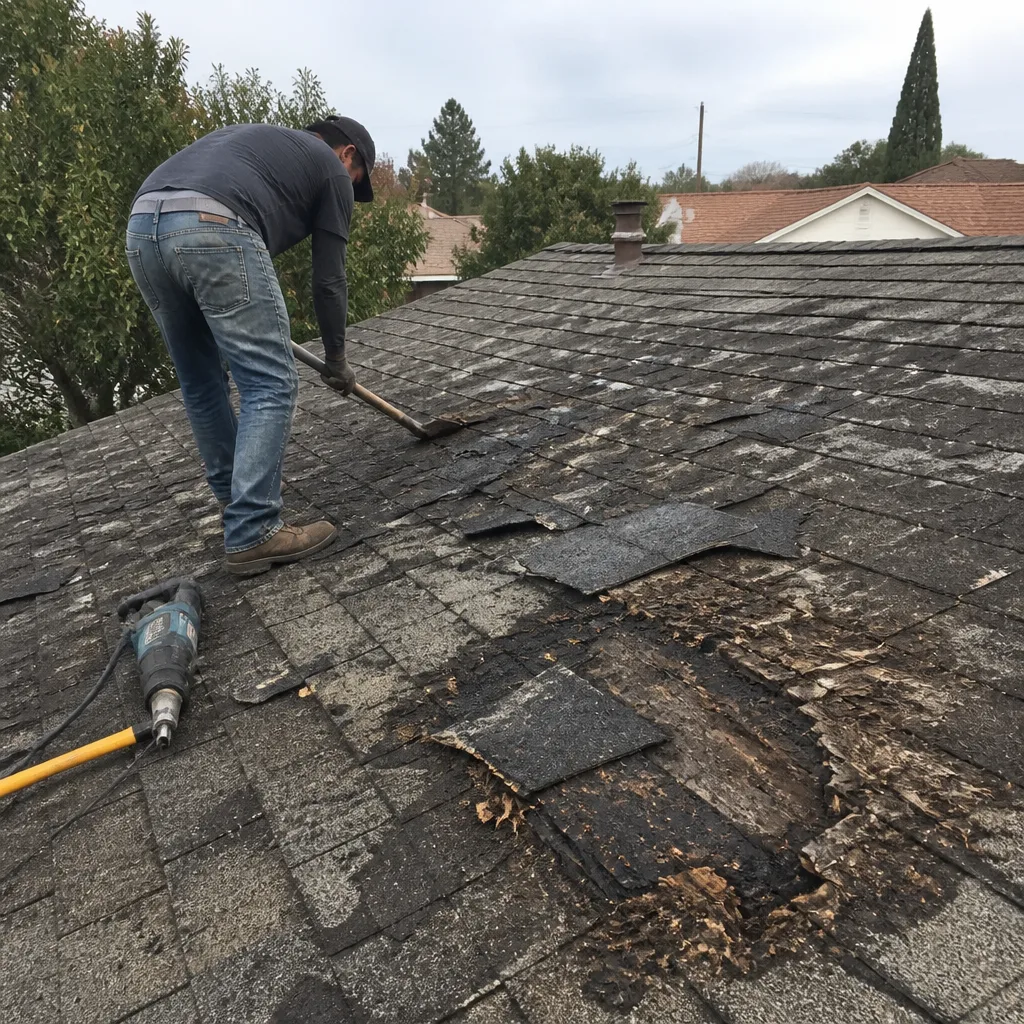 Before
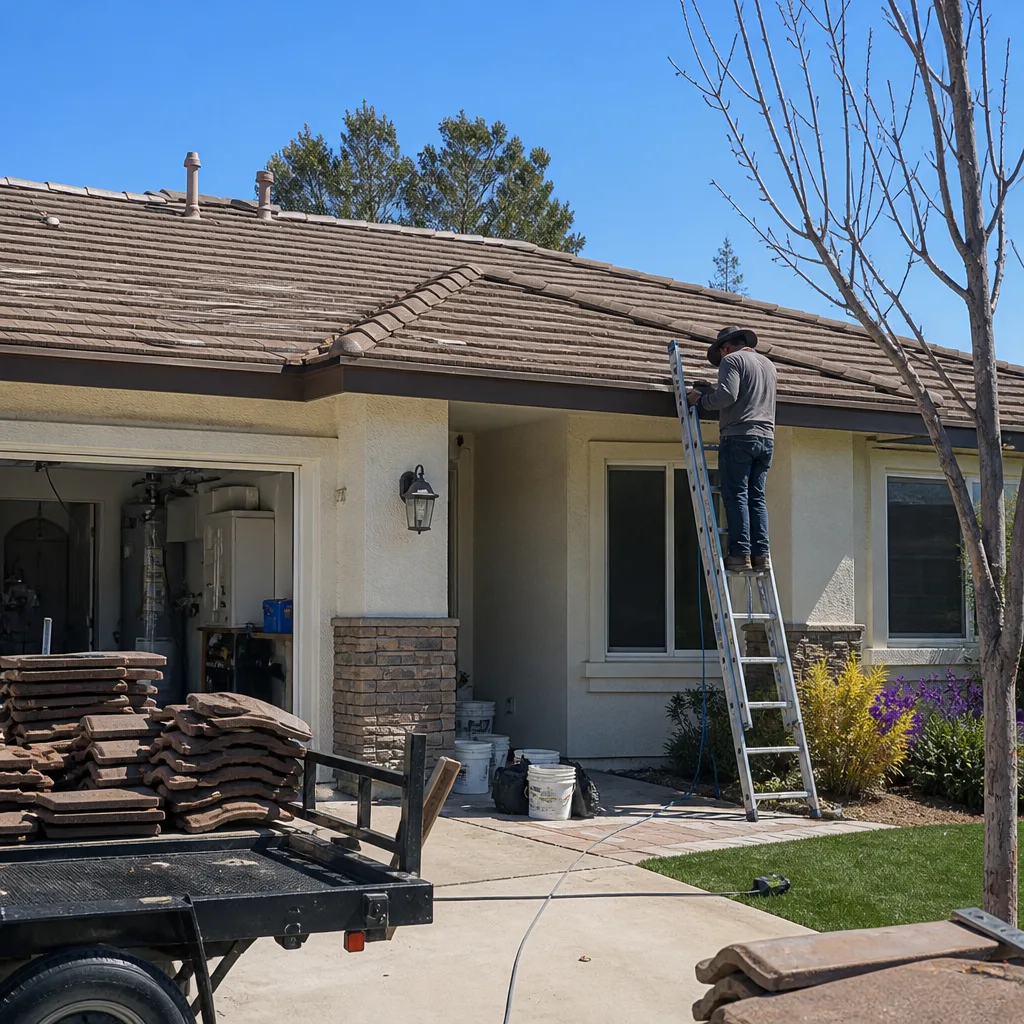 After
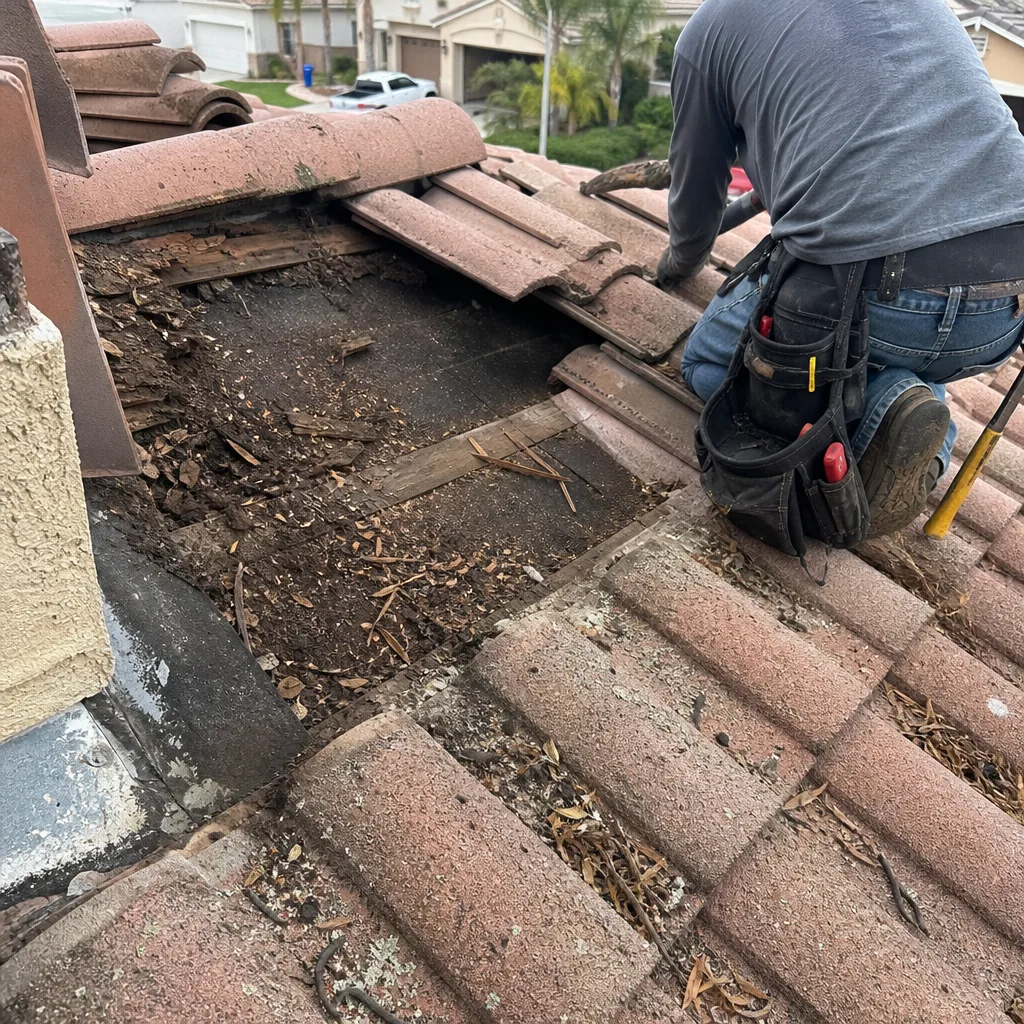 Before
 After
 Before
 After