
Last updated October 30, 2026
 Metal roofing
 Architectural shingles
 Tile roofing
 GAF
 Owens Corning
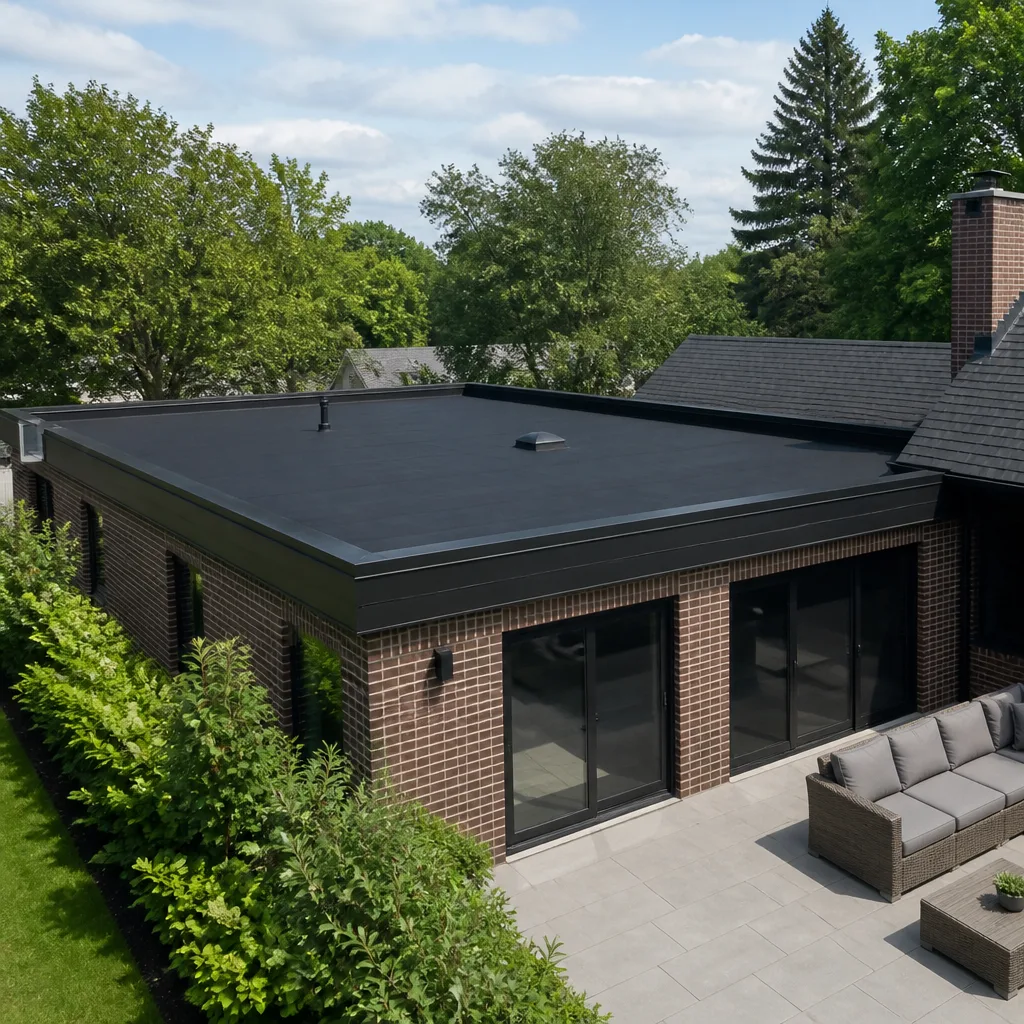 Flat & low-slope
Free roof inspection with deck photos before we talk money - GAF and Owens Corning certified installation
Seasonal Roofing Care for Murrieta: Year-Round Homeowner’s Guide
In Murrieta, the roof damage that shows up in January was almost always caused in August, when sustained heat above 100°F dried out sealants, curled shingle edges, and cracked flashings that then had no flexibility left when the first rain hit. Most roofing advice treats the year as four equal seasons, but that framework collapses in Riverside County’s inland valley climate. This complete guide to roofing in Murrieta works backward from what the city’s actual weather does to a roof, so you’re checking the right things at the right time instead of running a generic maintenance calendar that’s half irrelevant by October.
Styles & brands we work with
Quick Answer
The most effective seasonal roofing care in Murrieta means focusing on two critical windows: June (before peak heat) and October (before the rain season). Check attic ventilation, pipe boot sealants, and flashing flexibility before summer’s sustained 100°F-plus days, then clear debris and inspect valleys and underlayment edges before the first real storm. Santa Ana wind events from October through November demand a third, shorter check focused on granule loss and lifted shingle corners.
Table of Contents
- Murrieta’s Climate: Two Seasons, Not Four
- The Summer Heat Protocol: What to Check in June
- Santa Ana Wind Season: October Through November
- The Pre-Rain Inspection Window: October
- After a Significant Rain Event: The 20-Minute Ground Check
- Winter Monitoring: December Through February
- Spring Recovery: March Through May
- Common Mistakes to Avoid
- When to Call a Professional
- Frequently Asked Questions
- The Bottom Line
Murrieta’s Climate: Two Seasons, Not Four
Murrieta sits in a transitional zone between the cooling influence of the Santa Ana Mountains and the inland heat of the Temecula Valley. That geography creates a specific roofing stress pattern: long periods of dry, high-UV exposure punctuated by short, intense rain events. A roof in Murrieta typically sees 260-plus days of sun annually, with summer temperatures routinely crossing 100°F for consecutive weeks. The December through March rain average is modest on paper, but when storms arrive, they often deliver half an inch or more in a single afternoon, enough to exploit any seal that heat has already compromised.
The practical takeaway is simple: if you’re spreading equal maintenance energy across every month, you’re overworking certain periods and ignoring the two windows that matter most. June and October are the load-bearing months for Murrieta roof care. Everything else supports those two.
We’ve inspected hundreds of roofs across Murrieta, from the older subdivisions off California Oaks Road to the newer construction near Clinton Keith Road, and the pattern holds everywhere: heat does the initial damage, rain does the visible damage, and homeowners only notice the second half of that equation.
The Summer Heat Protocol: What to Check in June
By the time July’s peak temperatures arrive, any roof vulnerability that existed in spring will have already started to degrade. June is your intervention point. The heat protocol has three components: ventilation, sealants, and surfacing. Each takes 15 to 30 minutes to evaluate, and none requires walking the roof itself in most cases.
1. Attic Ventilation and Ridge Vent Clearance
Murrieta attics routinely reach 140°F to 160°F in July and August if ventilation is insufficient. That superheated air radiates downward into living spaces, pushing air conditioning costs up, but it also cooks shingles from underneath. Asphalt shingles rated for 25 or 30 years can lose meaningful lifespan when the underside stays hot for months.
Check that ridge vents are unobstructed. Birds, dust accumulation, and even blown debris from spring winds can clog the vent openings. From the ground, look for visible gaps along the ridge line. Inside the attic, check that soffit vents aren’t blocked by insulation and that airflow moves from intake to exhaust. If your attic feels like a sauna at 9 a.m. on a mild day, ventilation is failing.
2. Sealant Condition Around All Penetrations
Every pipe boot, vent collar, and chimney flashing on your roof relies on a flexible seal. Murrieta’s UV exposure breaks down those seals faster than almost any other climate factor. The plastic or rubber boot around plumbing vents dries and cracks. Caulk around chimney flashing loses adhesion. By August, those dried seals have no flex left, and they’re primed to fail the moment water needs to flow around them.
From the ground with binoculars, or from a ladder at the eave, look for visible cracking, shrinking, or separation around anything that pokes through the roof. Gray or chalky sealant is aging. Separated sealant is already failing.
3. Shingle Surfacing and Edge Condition
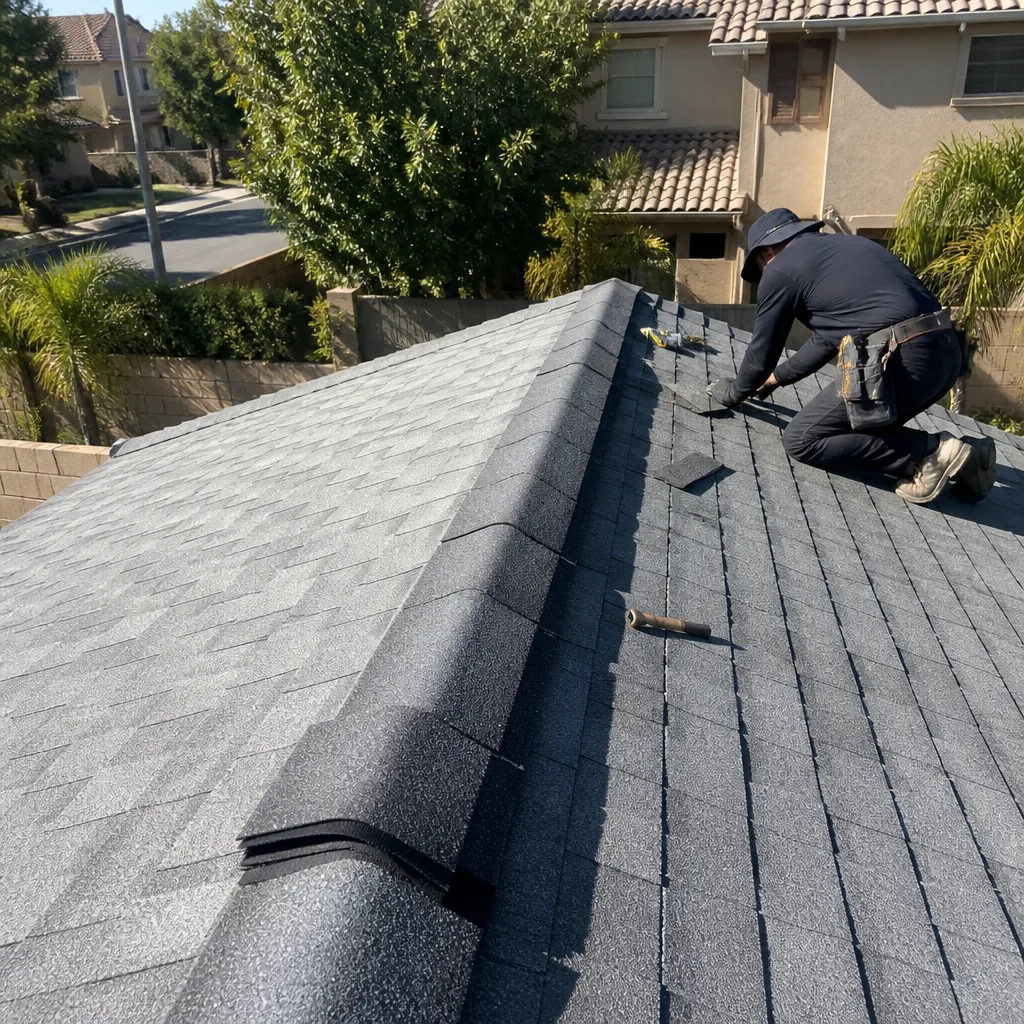
Curled shingle corners in June are a warning, not a problem. They get worse through July and August, and by the time the first rain comes, those curled edges become tear points. Look for shingles that have lifted at the corners, especially on south- and west-facing slopes. Those slopes take the harshest afternoon sun in Murrieta’s summer.
If you find any of these three conditions in June, the fix is usually a repair-level job, not a replacement. A targeted sealant refresh, a ventilation correction, or a small section repair in June costs a fraction of what interior water damage costs in January. Our Roof Repair in Murrieta service handles exactly these pre-heat corrections, usually in a single visit.
Santa Ana Wind Season: October Through November
Santa Ana winds are the most underrated roofing threat in Murrieta. These offshore winds push dry desert air through the mountain passes and into the valley, routinely gusting 40 to 60 mph in exposed areas. They arrive right before the rain season begins, which creates a specific problem: they damage roofs and then the rain immediately exploits the damage.
What Santa Ana winds actually do to a roof breaks down into three categories.
- Debris loading: Murrieta’s mature oaks and eucalyptus trees drop limbs and leaves during high wind events. That debris accumulates in valleys, behind chimneys, and against flashings, where it traps moisture when rain follows.
- Granule loss: Wind-driven sand and dust scour the protective granule surface off shingles. You can often see granule accumulation in gutters and downspout splash blocks after a Santa Ana event. Losing granules accelerates UV damage to the asphalt underneath.
- Uplift stress: Sustained gusts work shingle edges loose, especially on roofs older than 15 years where the adhesive strip has lost grip. The first shingle to lift becomes a sail, and each subsequent wind event tears more of the field.
The practical response is a visual check after each major wind event, focused on the ground-level signals: shingle pieces in the yard, granules in the downspout splash blocks, and new branch material on the roof surface. If you find shingle debris on the ground, the roof needs an inspection before rain arrives. Materials from brands like Atlas and IKO, which we carry at Rosewood Roof Repair, are engineered with enhanced wind-resistance ratings, but even the best materials can’t resist a lifted corner that’s been ignored for three weeks. For help selecting materials, see our guide on choosing the right roofing brand in Murrieta.
The Pre-Rain Inspection Window: October
If you do one roof task per year, make it the October pre-rain inspection—your first step in any complete roof repair plan for Murrieta homeowners. This single check prevents the majority of interior water damage claims in Murrieta homes, and it’s the difference between catching a $300 sealant problem and paying for ceiling repair, insulation replacement, and mold remediation after a January storm.
The October window is the right time because the roof has already absorbed a full summer of UV damage, Santa Ana winds have deposited whatever debris they’re going to move, and the rain hasn’t started yet. The roof is in its worst condition of the year at the exact moment it needs to perform.
Here’s the pre-rain checklist, in order of priority.
- Valley inspection: Murrieta’s older ranch-style homes often have valley-heavy roof designs. Valleys channel the highest water volume, and they’re where debris accumulates first. Look for trapped leaves, granule buildup, and visible wear at the valley center line.
- Penetration seals: Re-check the pipe boots and vent collars you looked at in June. Four months of heat have advanced any sealant degradation. If they looked marginal in June, they’re failing by October.
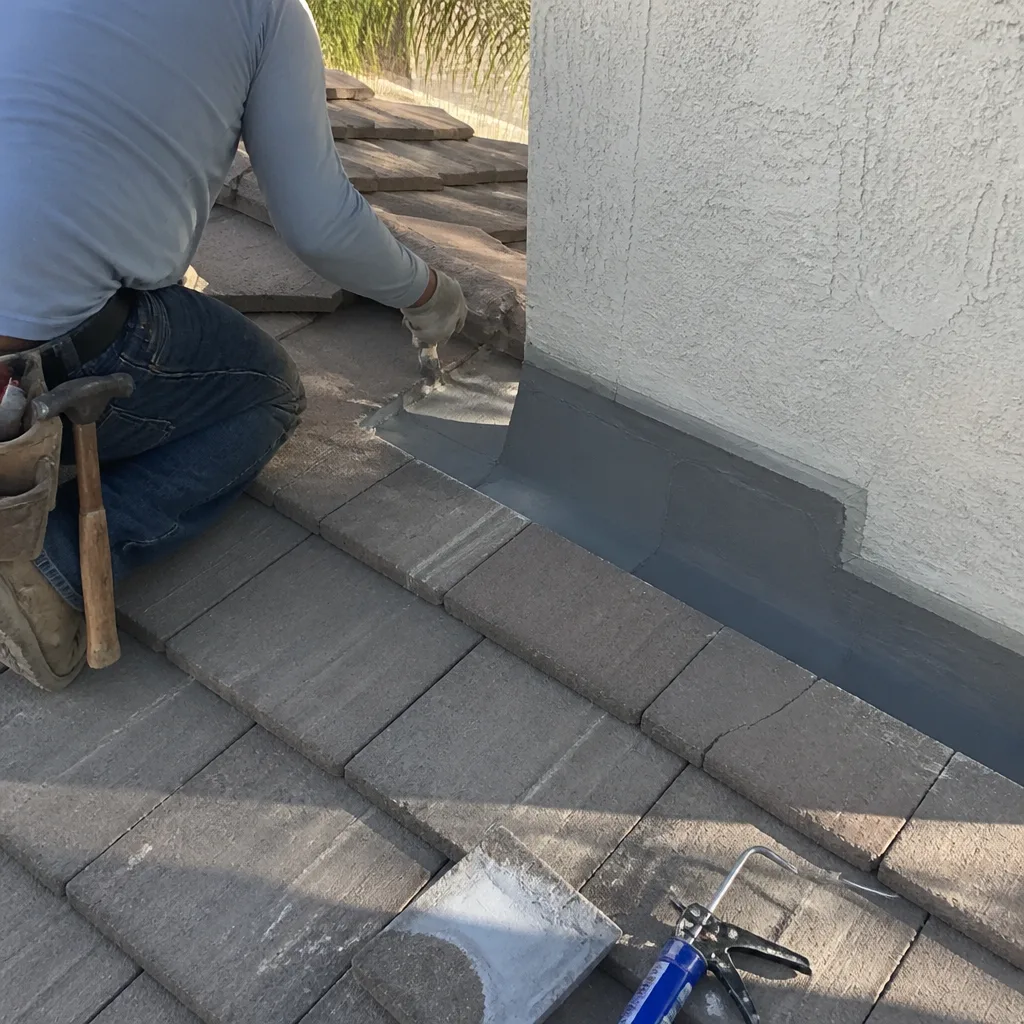
- Flashing integrity: Check chimney flashing, wall-step flashing, and skylight curbs for separation, lifted edges, or missing sealant. Water follows the path of least resistance, and a lifted flashing edge creates exactly that path.
- Gutter and downspout flow: Clogged gutters in Murrieta’s first big rain turn rooftop water into a waterfall that overshoots the gutter entirely, soaking the fascia and foundation. Clear them before the rain, not after.
- Underlayment edge condition: At the eave line, you can sometimes see exposed or crumbling underlayment at the drip edge. That’s the last line of defense before water reaches the deck. If it’s visible and deteriorated, it needs attention before rain.
Rosewood Roof Repair offers a Roof Inspection in Murrieta that covers exactly this pre-rain checklist, with a written condition report that identifies what needs attention now and what can wait until spring.
After a Significant Rain Event: The 20-Minute Ground Check
After any storm that delivers more than half an inch of rain, especially the first two or three storms of the season, run through the ground-level checks below. They catch active leak paths before they cause ceiling damage, and none of them require getting on the roof.
- Walk the interior perimeter: Look for water stains, damp spots, or paint discoloration on ceilings and walls, especially around chimneys, skylights, and ceiling penetrations. A fresh leak shows as a darker, damp area. An older leak shows as a yellow or brown ring.
- Check the attic if accessible: Within 24 hours of the storm, check for visible water on the underside of the roof deck, damp insulation, or drips around penetrations. Attic leaks are visible long before they stain a ceiling.
- Inspect ground-level spill points: After the rain stops, look at the ground around downspout splash blocks. If one area is eroded or unusually soggy, water is concentrating there, often from a gutter joint leak or an overshooting valley.
- Review the roof from the street: Walk to the curb and look for anything visibly different from before the storm: lifted shingle sections, shifted flashing, or debris piles in valleys. Murrieta’s low-angle winter light makes raised edges easier to spot.
- Listen for drips: In the first few hours after rain, go quiet inside the house and listen. A roof leak behind a wall or above a vaulted ceiling often announces itself as a drip before it shows as a stain.
If any check turns up a concern, address it immediately. Rain seasons in Murrieta come in clusters, and the next storm is often one week away, not one month. A small active leak that gets ignored through two or three storms becomes a much larger repair scope.
Winter Monitoring: December Through February
Murrieta’s winter isn’t harsh by national standards, but it’s the season when accumulated roof damage finally announces itself. The work here is monitoring rather than maintenance, with a focus on catching active leaks early and preventing the secondary problems that follow water intrusion.
The main winter threat in Murrieta isn’t snow or ice; it’s the combination of low temperatures, occasional frost, and repeated wet-dry cycles. Sealants that heat damaged in summer are now brittle. When the first cold snap arrives, they contract further. When rain falls, water finds the gaps. When the sun returns, the wet materials expand and dry at different rates, creating more separation.
Concrete tile roofs, common in Murrieta’s newer communities, deserve special attention in winter. The tiles themselves handle rain well, but the underlayment beneath them ages with heat exposure. By the time a tile roof reaches 20 to 25 years, the underlayment is often the failure point, not the tiles. Water moves under the tiles, hits a degraded underlayment seam, and finds the deck. Winter is when those leaks appear.
During winter, your only recurring task is the post-rain ground check described above. Do it after every significant storm, and you’ll catch problems at the repair stage rather than the replacement stage.
Spring Recovery: March Through May
Spring in Murrieta is the assessment season. The rain has stopped or slowed, the full summer heat hasn’t started, and you have a clean window to evaluate what winter exposed. The goal is to identify and fix vulnerabilities before June’s heat protocol begins, so you don’t carry a known weakness into another thermal stress cycle.
Spring assessment focuses on three questions.
- Did winter expose any water intrusion points? Any leak that appeared during the rain season, even a small one, is a signal that the roof’s water-shedding system has a gap. Fix it now. The damage will not improve over summer, and the next rain season will find the same gap.
- Are there visible heat-stress indicators? Curled shingle edges, exposed nails, cracked sealant, or granule loss that you noted in fall but didn’t address should be evaluated now. These conditions worsen over summer, and the cost to repair them in March is stable. The cost to repair them in August, after they’ve degraded further, is higher.
- Is the roof approaching end of service life? Spring is the right time to make a replacement decision. If your roof is 18-plus years old and winter exposed multiple problem areas, replacing before summer eliminates the risk of a heat-season failure and the disruption of a rain-season emergency. A spring replacement also means the new roof’s first test is summer, which is far easier than a fall replacement tested by winter rain.
If winter revealed vulnerabilities that need a repair-level response, spring is ideal for scheduling the work. The weather is dry, roof crews aren’t in storm-response mode, and material lead times are shorter than the fall rush. If winter revealed enough cumulative damage to warrant replacement, our Roof Replacement in Murrieta service gives you access to material options across seven brands, so the replacement matches your budget and warranty expectations rather than whatever a single-line contractor happens to stock.
Common Mistakes to Avoid
- Ignoring the June heat window because the roof “looks fine” from the street. Heat damage is invisible from the curb in its early stages. The seals and flashings that fail in December started deteriorating in June. A visual check during the heat protocol window is the cheapest intervention point, and skipping it means you’ll discover the problem when it’s already leaking.
- Cleaning gutters only in fall. Murrieta’s Santa Ana winds can load gutters with debris in a single afternoon in October, but spring winds and oak shedding contribute too. If gutters are clogged when the first big rain hits, water backs up under the eave edge and finds a path under the shingle course. Twice-yearly gutter clearing, in late spring and late October, is the practical minimum for Murrieta homes with overhanging trees.
- Assuming concrete tile roofs don’t need underlayment attention. Tile roofs in Murrieta’s newer subdivisions off Clinton Keith Road and along the 215 corridor can look perfect from the street while the underlayment beneath them is failing. Underlayment replacement is a regular part of tile roof maintenance, typically at the 20- to 25-year mark, and ignoring it turns a managed replacement into a water-damage claim.
- Ignoring granule accumulation in gutters. A thin layer of granules in the gutter is normal aging. A thick layer, especially concentrated after Santa Ana events, means the shingle surface is losing protection at an accelerated rate. That roof is aging faster than its nominal lifespan, and the observation should trigger a professional evaluation rather than a shrug.
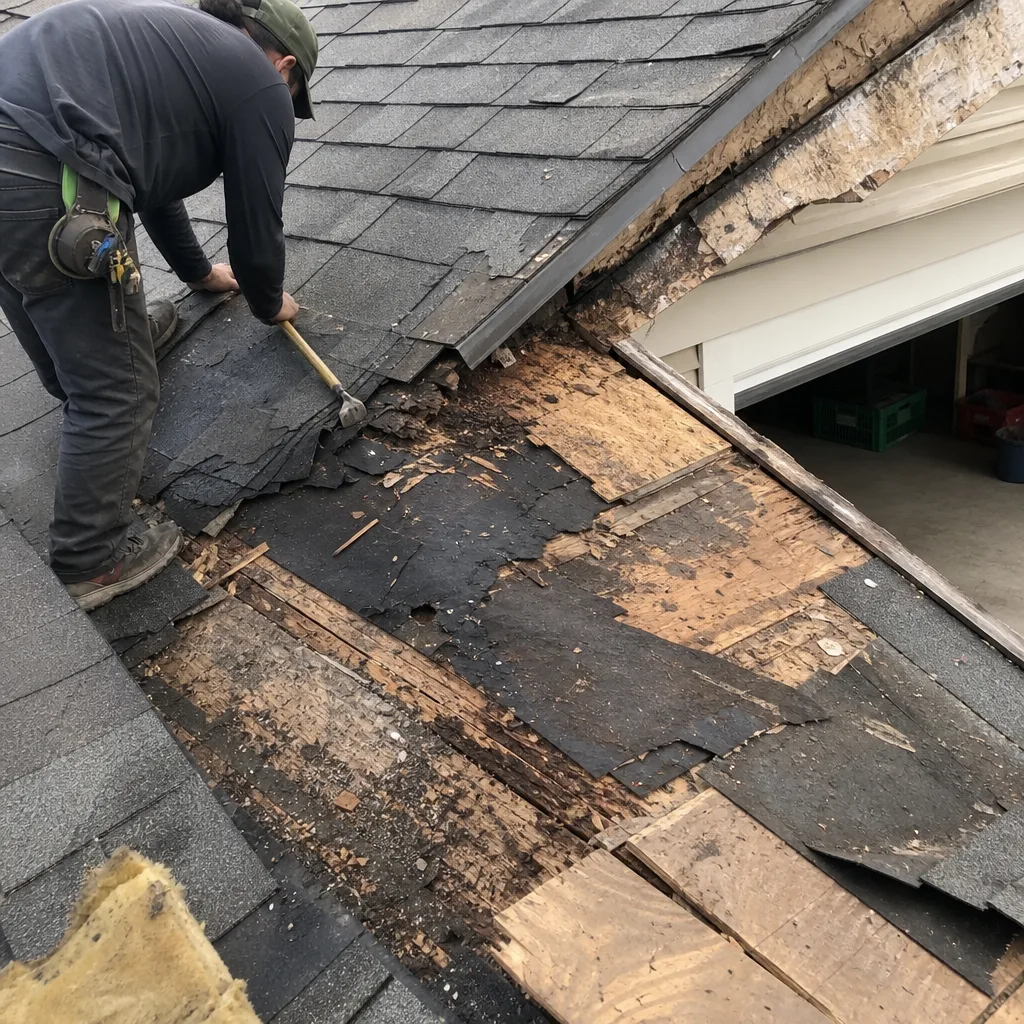
- Deferring a small leak because it “only happens in heavy rain.” Heavy rain is exactly when Murrieta roofs are tested. A leak that appears only in heavy rain is still a water intrusion point, and it’s growing where you can’t see it: in the deck, in the insulation, in the framing. The repair cost escalates with every storm cycle.
- Treating all roof materials as equivalent. A 30-year architectural shingle from Owens Corning and a value-tier shingle from Tamko are different products with different performance profiles. Murrieta’s heat and UV load reward material choices with higher granule embedment and better thermal stability. Choosing the cheapest option without understanding the tradeoff often means replacing the roof sooner, not saving money.
When to Call a Professional
Some roof conditions are clear signals to bring in a specialist rather than continuing to monitor. If you see interior water stains on ceilings or walls, call immediately; active leaks don’t self-heal. If your October inspection reveals failed sealants, lifted flashings, or visible underlayment degradation, those are repair-level tasks that require professional tools and training. If your roof is past 18 years old and winter exposed multiple problem areas, a full evaluation is the right step before you spend more on piecemeal repairs. And if you’re uncomfortable with heights, leave every above-ground check to someone who isn’t. Rosewood Roof Repair offers free estimates in Murrieta, and we’re a roofing-only company. Call (844) 900-4167 to schedule your free estimate.
Frequently Asked Questions
Once per year at minimum, timed for October before the rain season begins. Homes over 15 years old benefit from a second check in June before peak heat arrives. The October inspection catches heat-season damage that will leak in winter; the June inspection catches winter damage and prevents it from worsening through summer. If your home has mature tree coverage, add a post-Santa Ana visual check in November.
Expect to spend $150 to $350 for a professional roof inspection in Murrieta, depending on roof size and complexity. Targeted repairs like pipe boot replacement, sealant refresh, or minor flashing correction typically run $250 to $750, while larger repairs like valley rebuilds or underlayment replacement under tile range from $1,000 to $4,000 or more. The cost is always lower before water enters the home than after. Call (844) 900-4167 for an exact quote; estimates are free.
Asphalt shingles with high granule embedment and UV-stable asphalt formulations perform best, and brands like GAF, CertainTeed, and Owens Corning are engineered specifically for high-heat markets. Concrete tile, used extensively in newer Murrieta construction, handles surface heat well but depends on the underlayment beneath it, which degrades with heat exposure and needs replacement around the 20- to 25-year mark. We carry materials from seven manufacturers so the selection matches your spec, not a single brand’s inventory.
Check three indicators: attic temperature on a mild day, shingle condition on south-facing slopes, and cooling-bill trends year over year. If the attic feels hot at 9 a.m. on a 75°F day, ventilation is inadequate. If shingles on south and west slopes are curling while other slopes are not, heat is being trapped. And if cooling costs climb without a change in usage patterns, the roof is radiating heat inward. A ventilation correction is one of the highest-return roof investments in Murrieta’s climate.
Yes, for the monitoring checks. Ground-level and ladder-at-eave observations with binoculars can catch debris accumulation, curled shingle edges, visible sealant cracks, and granule accumulation in gutters. But ground-level checks miss what’s happening on the roof surface itself, especially on complex roof geometries, valleys, and flashings. Professional inspections include surface-level evaluation that catches problems before they’re visible from the ground. If your roof is steep or you have any height concerns, keep both feet on the ground and call a professional.
Replace when cumulative repair frequency and roof age make continued patching uneconomical. In Murrieta, asphalt shingle roofs typically reach replacement age at 18 to 25 years depending on material tier, while concrete tile roofs need underlayment replacement at 20 to 25 years even if the tiles remain intact. If you’re facing multiple repairs per year, discovering underlayment failure, or seeing widespread granule loss, replacement is the honest recommendation. A full evaluation gives you the data to make that call with confidence.
The Bottom Line
Seasonal roofing care in Murrieta isn’t about doing something every month; it’s about doing the right thing in the two windows that matter: June, before the heat peaks, and October, before the rain arrives. Those two checks, plus post-storm ground monitoring and a spring assessment, cover the failure cycle that Murrieta’s climate actually creates. Heat does the initial damage. Rain does the visible damage. Catch the problem at the heat stage, and most roofing issues stay repair-level and affordable. Miss it until the rain stage, and the cost multiplies. For help with any of it, Rosewood Roof Repair home has the full inspection, repair, and replacement roadmap covered.
Written by the team at Rosewood Roof Repair, serving Murrieta since 2014. Explore more guides & resources on our blog.
See the difference
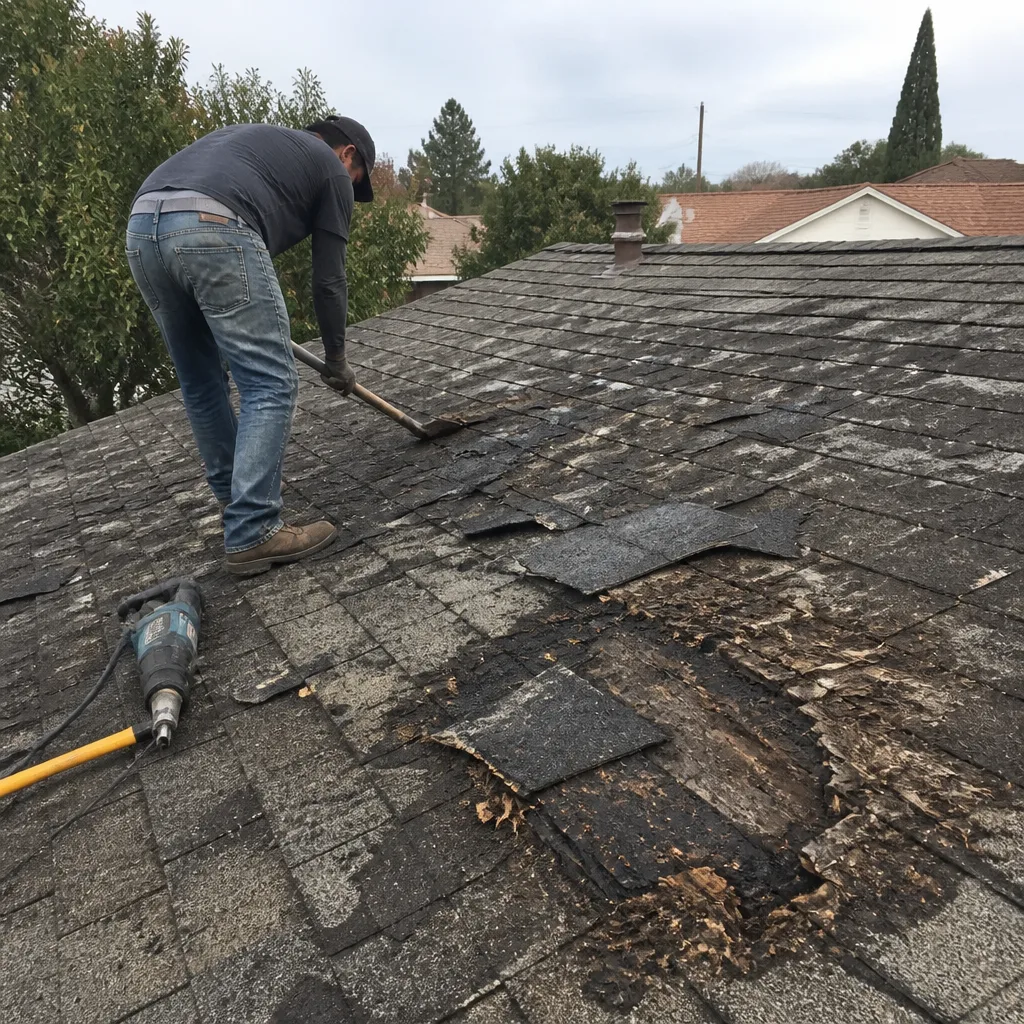 Before
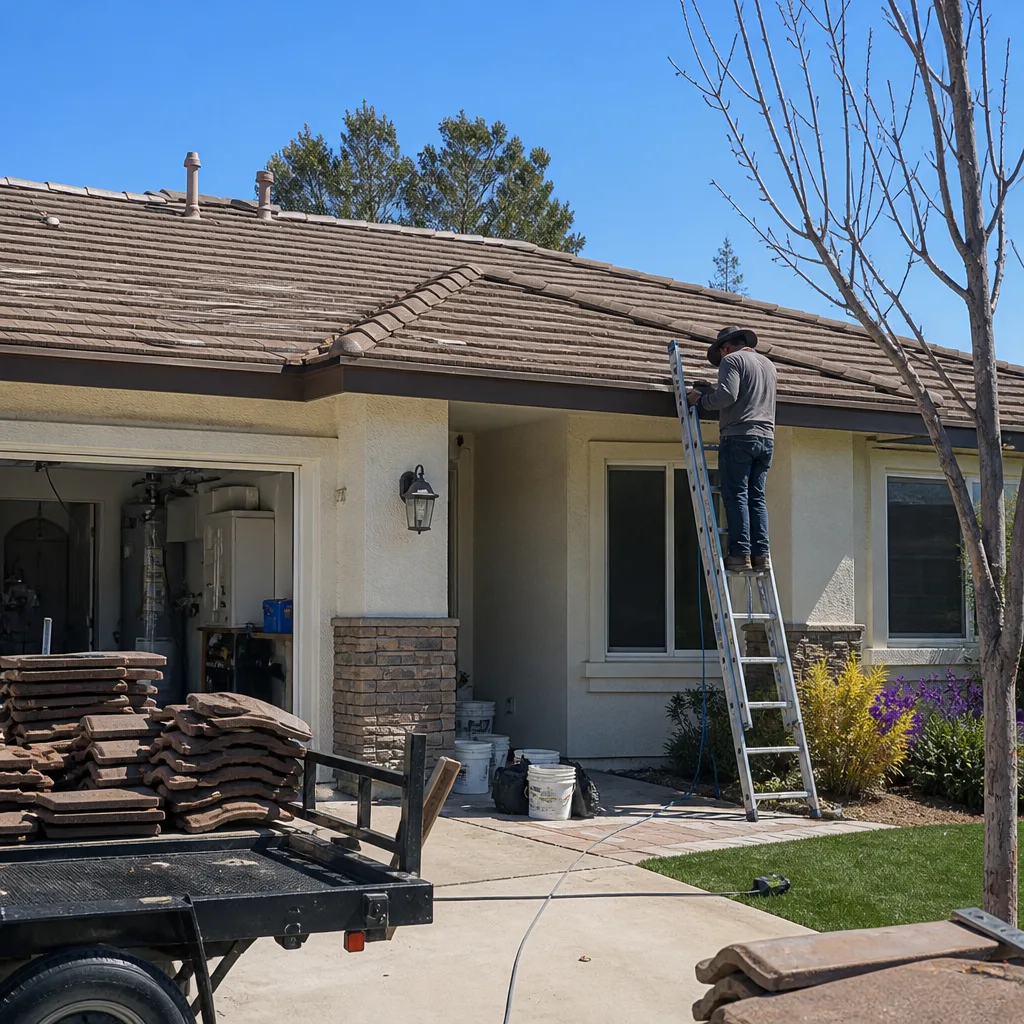 After
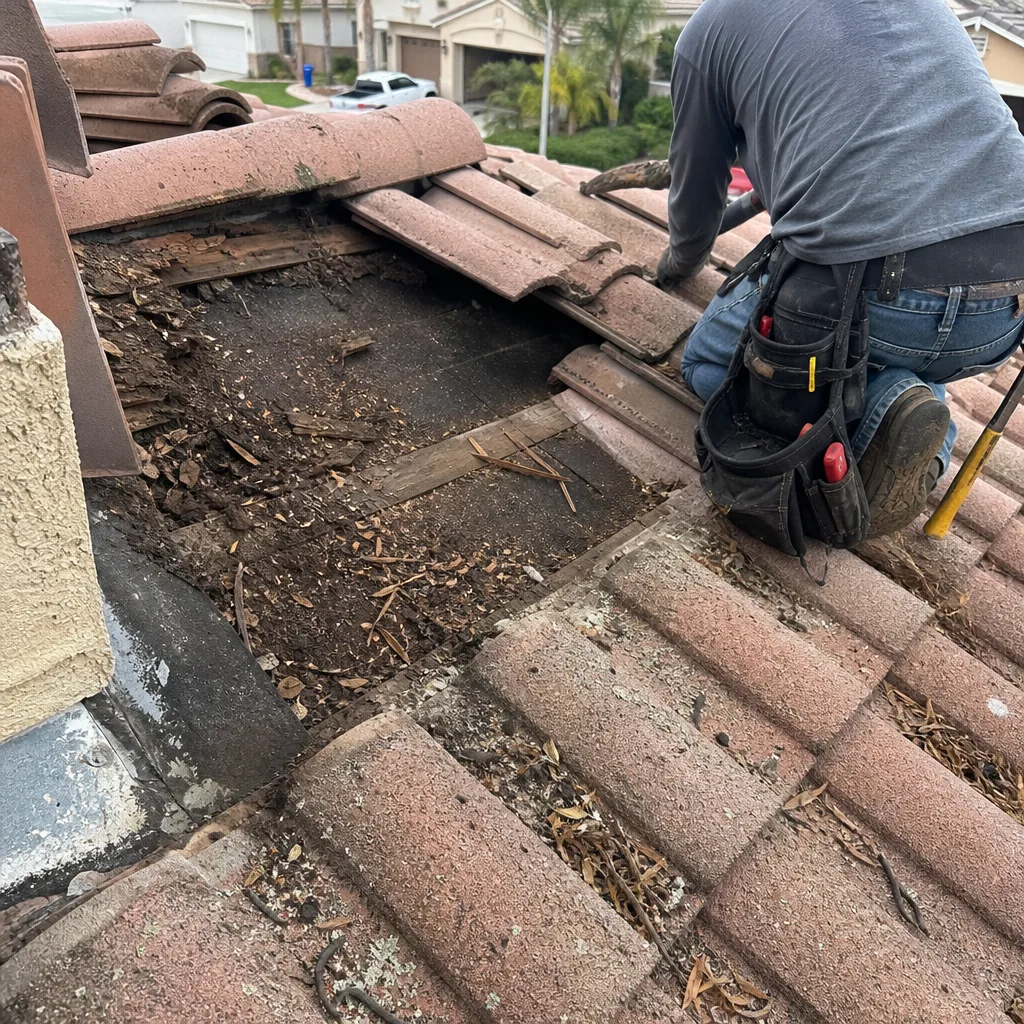 Before
 After
 Before
 After