
Last updated October 30, 2026
 Architectural shingles
 Metal roofing
 Tile roofing
 GAF
 Owens Corning
 Flat & low-slope
Free roof inspection with deck photos before we talk money - GAF and Owens Corning certified installation
Roof Repair Troubleshooting: Common Problems and How to Fix Them
The water stain spreading across your bedroom ceiling is almost never directly below the point where water is actually getting in. Water travels. It runs along rafters, follows the slope of the sheathing, pools around nail heads, and drips six or eight feet from the original breach. This single fact explains why so many roof repairs fail on the first attempt: the contractor fixed what they could see from the ground or from the attic hatch, not what was actually happening. We’ve spent years in Murrieta attics tracing water lines backward from stains to sources, and the pattern is consistent. Homeowners who understand how water moves through a roof assembly become better clients, ask sharper questions, and end up with repairs that hold. This guide is built to get you there.
Styles & brands we work with
Quick Answer
Roof repair troubleshooting starts with tracing the problem backward from its symptom to its source: a ceiling stain is not a leak location, a lifted shingle is not always the cause of water intrusion, and granule loss does not automatically mean a roof is failing. The most common roof problems in Murrieta are isolated flashing failures, nail pops, and wind-damaged shingles, and each traces back to a specific, fixable entry point. The practical fix is methodical diagnosis first, then repair: document what you observe, trace the water path in the attic, and call a roofing-only specialist who will follow the evidence rather than guess from the curb. For Roofing Cost Breakdown: The Murrieta Homeowner’s Reference for 2026, see our detailed pricing guide.
Table of Contents
- How Water Actually Moves Through a Roof System
- The Five Most Commonly Misdiagnosed Roof Problems
- How to Trace a Leak Backward: A Step-by-Step Sequence
- How to Tell If a Problem Is Isolated or Systemic
- What to Document Before Calling a Contractor (and What Not to Touch)
- Red Flags in a Contractor’s Diagnosis: When They’re Guessing
- Common Mistakes to Avoid
- When to Call a Professional
- Frequently Asked Questions
- The Bottom Line
How Water Actually Moves Through a Roof System
Before you can troubleshoot anything, you need to understand the path water takes once it gets past the shingle layer. A roof is not a single waterproof membrane. It’s an assembly of layers: shingles or tile on top, underlayment below that, sheathing below that, and then the framing. Each layer is designed to shed water downward, but water that makes it past the first layer doesn’t just sit there. It moves.
Gravity pulls water down the roof deck along the pitch. Capillary action pulls water sideways into seams and around fasteners. Wind-driven rain pushes water uphill for inches at a time. In a typical Murrieta home with a 4/12 or 5/12 pitch, a leak at a pipe boot near the ridge can enter the attic and travel ten feet down the rafter before it pools on top of the ceiling drywall and finally shows up as a stain in a bedroom corner. The path is rarely straight down.
We’ve opened ceilings in Murrieta where the visible stain in the living room traced back to a flashing failure at a chimney on the opposite side of the house. The homeowner had already paid one contractor to seal the area directly above the stain. It didn’t work because the repair was done at the exit point, not the entry point.
The practical takeaway: when you see water inside your home, your first job is not to climb on the roof. It’s to get into the attic with a flashlight and follow the water line. The sheathing will show you the path. Dark streaks, water rings around nails, and damp insulation all leave a trail. Start at the interior stain and work your way up and out. That sequence, more than anything else, is what separates a real diagnosis from guesswork.
The Five Most Commonly Misdiagnosed Roof Problems
Some roof problems are real but overdiagnosed. Others are real but misattributed. Here are the five we see most often in Murrieta, and how to tell the difference.
1. Granule Loss Mistaken for Wear
Asphalt shingles shed granules throughout their life. A new roof will shed heavily for the first few months, then the rate drops off, then it increases again as the shingles age. Finding granules in your gutters is normal, especially after a hot Murrieta summer when shingle surfaces expand and contract. What matters is whether the granules are coming off in a uniform pattern or in concentrated patches. Bare spots on shingles, where the asphalt substrate is exposed, indicate actual wear. A gutter full of granules with no bare spots on the roof surface is usually just seasonal shedding. Contractors who point to gutter granules as proof you need a new roof are either inexperienced or selling.
2. Condensation Mistaken for Leaks
Murrieta doesn’t get the humidity of the Gulf Coast, but we do get cool nights after warm days, and that swing is enough to cause condensation in under-ventilated attics. Water droplets on the underside of the sheathing, rust on nail heads, and damp insulation at the eaves are all signs of condensation, not a roof leak. A leak leaves a consistent stain pattern. Condensation is diffuse and follows the temperature gradient. Fixing condensation requires ventilation changes, not roofing work. If a contractor looks at attic moisture and immediately starts talking about re-roofing, ask them to explain the venting calculation first.
3. Wind Uplift Mistaken for Installation Failure
After a Santa Ana wind event, it’s common to see shingles that look lifted or “flipped.” Homeowners assume the roof was installed wrong. Often, the opposite is true: the shingles did their job by flexing under load and then resealing when the sun hit them. Asphalt shingles have a sealant strip that activates with heat. After strong winds, some shingles lose their seal and sit slightly raised until a hot day re-bonds them. The test is time and heat. If shingles are still lifting two weeks after the wind event, you may have a sealant problem. But earlier than that, it may just be a roof doing what it’s designed to do.
4. Pipe Boot Cracks Misdiagnosed as Flashing Failure
Plumbing vent pipe boots are rubber or neoprene collars that seal around the pipe where it penetrates the roof. In Murrieta’s UV-intense summers, these boots dry out and crack well before the shingles around them are done. The fix is a new boot, which costs a small fraction of what homeowners fear they’ll pay when they see water staining. But because the stain shows up on a ceiling near a wall, homeowners and less-thorough contractors sometimes assume a wall flashing problem or a valley leak. The pipe boot is buried under a shingle and easy to miss if you’re not looking. In our experience, this is the single most common fixable leak source on homes between ten and twenty years old in Murrieta.
5. Flashing Deterioration Read as a Failed Roof
Flashing is the metal at every transition: chimneys, walls, valleys, skylights, and penetrations. Flashing fails faster than shingles in almost every climate, and Murrieta is no exception. The metal corrodes, the sealant dries, and the fasteners loosen. The result is a leak that looks catastrophic from inside but is localized to a few linear feet of metal. A full re-roof would solve it, but so would replacing the flashing for a fraction of the cost. The diagnostic question is simple: is the field of the roof damaged, or just the transitions? If it’s just the transitions, you need a repair specialist, not a replacement pitch.
How to Trace a Leak Backward: A Step-by-Step Sequence
This is the sequence we use on every leak call in Murrieta, adapted for a homeowner who wants to gather useful information before picking up the phone. You are not fixing anything here. You’re becoming a better witness.
- Mark the interior stain. Before anything else, photograph the stain with something in frame for scale (a quarter, a business card). Note the date and the weather conditions over the previous 48 hours. Was it a wind-driven rain, a sustained drizzle, or a hot dry day? Leaks that appear on dry days suggest trapped water, condensation, or a slow weep that finally found its way down.
- Enter the attic during daylight. Bring a flashlight and a moisture meter if you own one. Turn off the lights and look for pinholes of daylight coming through the roof deck. Every pinhole is a possible entry point. Mark them mentally.
- Follow the water line. Start at the interior stain location on the attic floor (the top side of the ceiling drywall). Look for water marks on insulation, dark streaks on the rafters, and rust rings around nail heads. Trace the highest point of any water evidence up the rafter slope toward the eaves or ridge. The entry point is above the highest water mark, not next to it.
- Check the penetrations first. Before you inspect the open field of shingles, inspect every penetration: plumbing vents, furnace flues, attic access doors, bathroom fans, and the chimney. In our experience, penetration failures account for a large share of Murrieta leaks, and they’re the cheapest to fix.
- Move outside only after the interior trace is done. Now walk the roof line from the ground with binoculars or from a ladder if you’re comfortable on one. Match the interior entry point to an exterior feature: a pipe boot, a valley, a wall step flashing line, a missing shingle. You are looking for the correspondence between inside evidence and outside condition. That correspondence is what a contractor needs to see.
- Write down the sequence. A short note like “Stain in back bedroom, water line runs up rafter 4 toward valley, suspicious area around pipe boot at the valley” is far more useful to a contractor than “there’s a leak in my bedroom.” It saves a diagnosis visit and gets the repair done faster.
How to Tell If a Problem Is Isolated or Systemic
The single most important diagnostic fork in roof troubleshooting is this: is the problem a localized failure you can repair, or a symptom of a roof that has reached the end of its service life? Get this wrong in either direction and you either overspend on a replacement you didn’t need or sink money into repairs on a roof that should be retired.
Here’s the framework we use in Murrieta:
- Isolated failures are repeatable patterns of the same failure type at a small number of locations. One pipe boot cracked. One section of step flashing separated. Two shingles torn by wind. One valley clogging with debris. Each of these has a defined boundary, a defined cause, and a repair that addresses the cause. The rest of the roof is fine.
- Systemic failure is the same failure type appearing across multiple unrelated areas. Granule loss and curling at the eaves across the entire south-facing slope. Nail pops in clusters across the whole roof plane. Underlayment that feels brittle and cracked everywhere you touch it. Sheathing that’s spongy in multiple bays. These are signs the materials are failing as a group, not as isolated incidents.
- The age test. A 30-year architectural shingle on a Murrieta home that’s seen 20 years of sun is not going to be saved by replacing one pipe boot. You can do it, and it might stop that one leak, but the roof will leak again at the next failing component within a season or two. There’s a point where patching becomes throwing good money after bad. Any honest contractor will tell you when you’re at that point.
- The sheathing test. If you have access to the attic, press gently on the exposed sheathing between rafters. Healthy sheathing is firm. Soft, spongy, or crumbling sheathing means water has been getting in for longer than the visible stain suggests. One soft spot near a penetration is probably an isolated repair. Multiple soft spots across different areas is a roof that’s been failing quietly for years.
When we do a Roof Inspection in Murrieta, this is the exact framework we apply. The goal is to tell you whether you have a repair problem or a replacement problem, and to show you the evidence either way. You should expect that same clarity from any contractor you call.
What to Document Before Calling a Contractor (and What Not to Touch)
A contractor who shows up to a leak call with nothing but a ladder and a caulk gun is not diagnosing anything. The best thing you can do as a homeowner is hand them useful evidence. Here’s what that looks like.
Document This
- Interior stains: photograph them from straight-on and at an angle, with scale. Note the room, the distance from known reference points (the window, the closet door), and the date.
- Attic water lines: photograph the highest point of any water mark on rafters and sheathing. These show the path and the direction of travel.
- Exterior conditions from the ground: a clear photo of the roof slope above the suspected entry point. Use binoculars for detail. Note any obvious missing shingles, lifted sections, or debris accumulation.
- Weather context: the date of the leak, the type of rain, wind direction, and temperature. In Murrieta, our leak calls cluster after the first heavy rain of the season and after Santa Ana events, and that timing tells us a lot about the failure mode.
- Your own observations: “I only see the stain when it rains from the southwest” or “the stain grows larger after multiple dry days” are diagnostic gold.
Do Not Touch This
Some things are better left to a roofing specialist, both for your safety and for the integrity of the evidence. Climbing onto a steep roof, walking on tile, or leaning a ladder against a gutter are all ways to turn a $400 repair into an emergency room visit or a new gutter replacement. And never, under any circumstances, attempt to repair flashing, remove shingles, or seal a leak from inside the attic. A temporary fix done wrong can trap water inside the assembly and turn a small leak into sheathing rot. If you need a stop-gap measure, a tarp secured from the ground by a professional is the safest bridge until a real repair happens. For advance planning, read our Roofing Emergency Preparedness Guide for Murrieta Homes. Your job is observation, not intervention.
Red Flags in a Contractor’s Diagnosis: When They’re Guessing
Most contractors in Murrieta are honest professionals doing solid work. But the roofing trade has a low barrier to entry, and the pressure to sell a full replacement instead of a $600 repair is real. Here’s how to tell the difference between a contractor who is tracing the problem and one who is guessing, or selling.
- They don’t go in the attic. A contractor who quotes a leak repair without looking at the attic is diagnosing blind. There is no scenario where the interior of the attic is irrelevant to a leak diagnosis. If they won’t go up there, thank them and call someone else.
- They talk only about shingle replacement. If the diagnosis is “you need new shingles” and there’s no mention of flashing, underlayment, venting, or penetration seals, you’re hearing a generic answer. A real diagnosis names the entry point and explains the path.
- They quote a full replacement for one leak without explaining why. Sometimes a replacement is the right call, and we’ll tell you when it is. But the reasoning should be specific: the sheathing is failing in multiple bays, the field of the roof is at end of life, the underlayment is gone. “It’s just time” is not a diagnosis.
- They mention “while we’re up there” additions casually. Roofing is not a “while we’re up there” trade. Scope creep in roofing usually means the contractor is more comfortable with a bigger sale than with the repair job you actually need.
- They can’t or won’t show you the evidence. A good contractor will point at the cracked pipe boot, the separated flashing, the daylight showing through a nail hole. If they expect you to take it on faith, find someone who will show you what they’re seeing. We show every homeowner the photos we take in their attic and on their roof, because the diagnosis is the deliverable, not just the repair.
If you’re in Murrieta and you want a second opinion, Roof Repair in Murrieta is what we do. Every estimate starts with the same tracing process described in this guide, whether you hire us or not.
Common Mistakes to Avoid
- Sealing the interior stain before fixing the roof. Paint and drywall repair don’t stop water from coming in. They just hide the evidence. Fix the roof first, then fix the ceiling.
- Assuming the stain is the leak location. Water travels along the roof deck and framing. The stain on your ceiling is the exit wound, not the entry point. If you seal directly above the stain, you haven’t fixed the roof.
- Waiting for a bigger leak to justify a repair. Water that gets in today is rotting sheathing and growing mold even if you can’t see it from inside. A small leak is an inexpensive repair. A leak that’s been running for a year is often sheathing replacement, and sometimes framing repair.
- Calling a general contractor instead of a roofing specialist. A generalist is running a business across many trades. A roofing-only company is running every job, every tool, and every crew through one specialty. The diagnostic difference is real. We only do roofing, and it shows in how fast we find the source of a leak.
- Choosing the cheapest quote without asking why it’s cheaper. Roofing quotes vary for legitimate reasons: material quality, warranty coverage, whether the repair addresses the actual source or just the symptom. A $300 “seal it up” quote on a flashing failure will cost you more than a $600 proper repair within two years.
- Not documenting the problem before the repair. Photos and notes taken before the work starts protect you if the repair fails and help a new contractor pick up where the last one left off. Take five minutes and document the evidence. It’s the cheapest insurance in roofing.
When to Call a Professional
You should call a roofing specialist the moment you have a water stain on an interior ceiling, a missing or torn shingle after a wind event, or any daylight visible through the roof deck in your attic. You should also call before you spend money on a home you’re buying if the inspection flagged anything roofing-related. A roof inspection is cheaper than a surprise replacement, and it gives you the evidence to negotiate the sale. If you hear water dripping in the wall cavity, smell mildew in the attic, or see sagging in the roof line from outside, that’s an urgent call, not a next-week call. Rosewood Roof Repair offers free estimates in Murrieta: call (844) 900-4167 and we’ll come out, trace the problem, and show you what we see.
Frequently Asked Questions
Roof repair in Murrieta typically ranges from $350 to $1,200 for isolated issues like cracked pipe boots, small flashing repairs, and individual shingle replacement, while larger repairs involving multiple penetrations or localized sheathing replacement run $1,200 to $3,500. The exact cost depends on the type and extent of the failure, your roof’s pitch and accessibility, and the materials involved. Call (844) 900-4167 for an exact quote: estimates are free, and we’ll show you the evidence before we recommend any work.
It shouldn’t, and with a proper diagnostic process it usually doesn’t. The most common cause of change orders in roofing is discovering hidden damage during the repair: rotted sheathing under a leak that wasn’t visible until the shingles came off. That’s why we trace the problem thoroughly before quoting, and why we document what we find. Ask any contractor whether their estimate includes the possibility of hidden damage and how they’ll communicate if they find it. Reputable contractors alert you before proceeding, with evidence in hand.
In the City of Murrieta, small isolated repairs generally don’t require a permit, but larger repairs involving significant sheathing replacement or structural work do. The dividing line depends on the scope of work, and we’ll tell you which side of it your repair falls on during the estimate. When a permit is required, we handle it from start to finish, including the inspection.
Most isolated repairs, like a pipe boot replacement or a flashing repair, take two to four hours on-site. Repairs that involve replacing multiple shingles or a section of sheathing can take a full day. The diagnostic visit is the variable: a leak that has been traced and documented is a one-visit fix, while a leak with an unknown source can take an hour or more just to trace. This is why the documentation steps in this guide matter.
You can, but you shouldn’t, at least not as anything more than a very temporary measure. Roof sealant applied to the wrong spot does nothing, and sealant applied to the right spot is often a short-term fix that fails within a season or two. The real repair is replacing the damaged component: the boot, the flashing, the shingle. That work belongs to someone who can do it safely and correctly. If you’re between paychecks and the leak is active, a professional tarp is the right temporary solution, and it costs less than most people expect.
We carry materials from seven major manufacturers, including GAF, CertainTeed, Owens Corning, IKO, Atlas, Tamko, and Boral. That’s one of the broadest selections available from a single Murrieta roofing contractor, and it means we can match your existing roof or spec a new system to your budget and warranty expectations rather than selling whatever single line we happen to stock. Some repairs, particularly on tile roofs in the Temecula Valley corridor and the older Murrieta hillside neighborhoods, are best matched with Boral products, while a straightforward asphalt repair might call for a Tamko or CertainTeed shingle. The right material for your roof, not just the one we keep in the truck.
A properly executed repair on an isolated failure should last for the remaining life of the roof around it. If you replace a pipe boot today, you shouldn’t have to touch that pipe boot again for fifteen years or more. If a repair fails within a year or two, either the diagnosis was wrong, the workmanship was poor, or the roof has systemic issues that mean the repair was never going to be a long-term fix. That last scenario is the one homeowners fear most, and it’s why we’d rather tell you a repair doesn’t make sense than take your money for work that won’t hold.
The Bottom Line
Roof problems in Murrieta are usually solvable at the repair level if they’re caught early and diagnosed correctly. The diagnosis is the part most people skip, and it’s the part that determines whether your money is well spent or wasted. Trace the problem backward: from the interior stain to the attic water line to the exterior breach. Document what you see. Ask a contractor to show you the evidence. And when the diagnosis points to multiple failures across the roof’s field, don’t patch forever: that’s when Roof Replacement in Murrieta becomes the honest conversation. Seven brands, one company, your call. If you’re not sure where your roof stands, visit our home page to learn more about what a roofing-only specialist does differently.
Written by the team at Rosewood Roof Repair, serving Murrieta since 2014. Explore more guides & resources on our blog.
See the difference
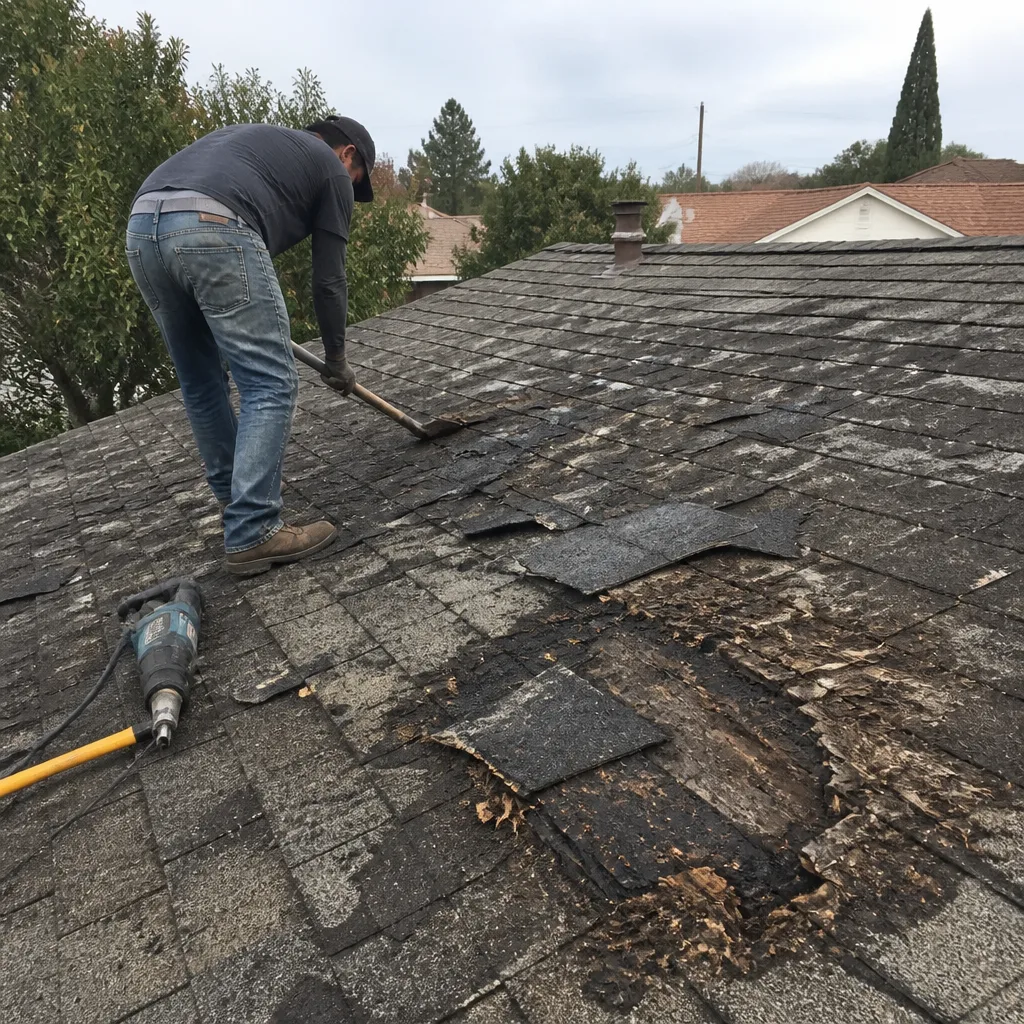 Before
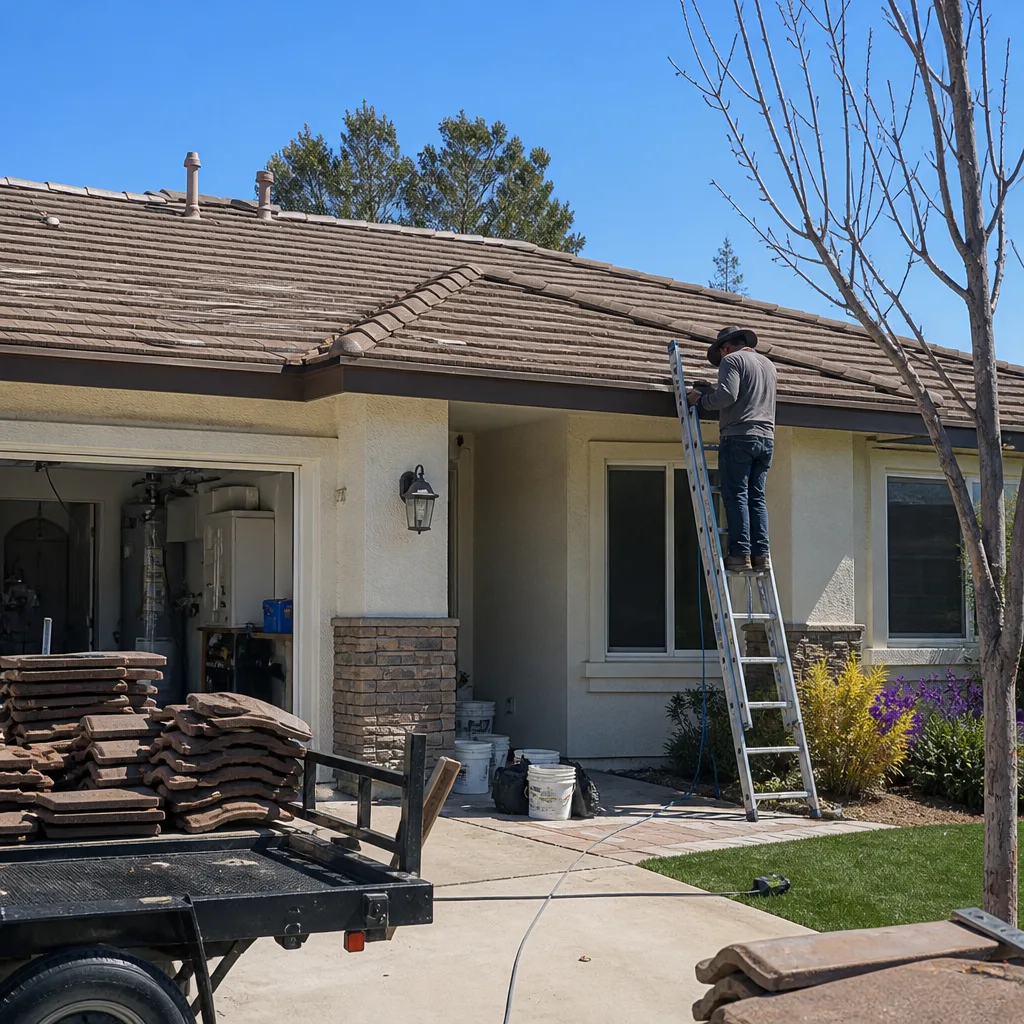 After
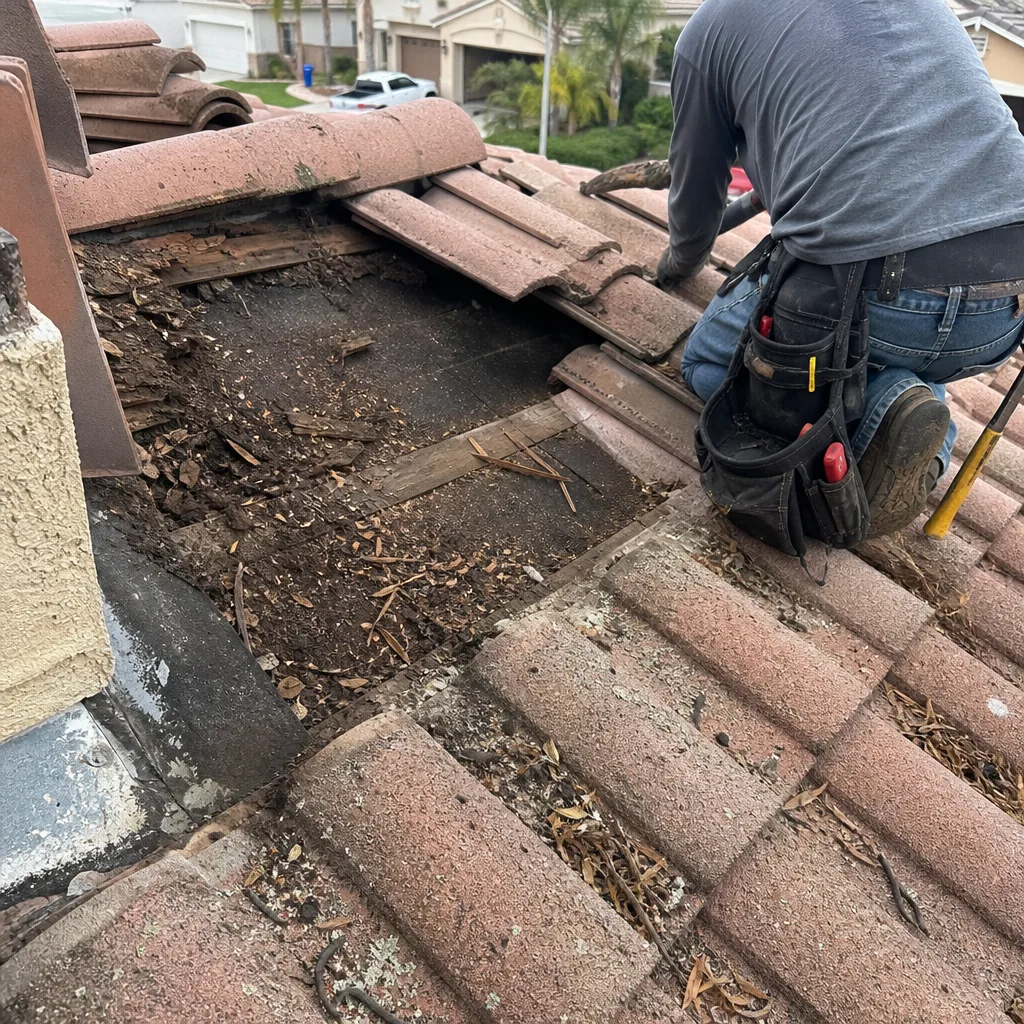 Before
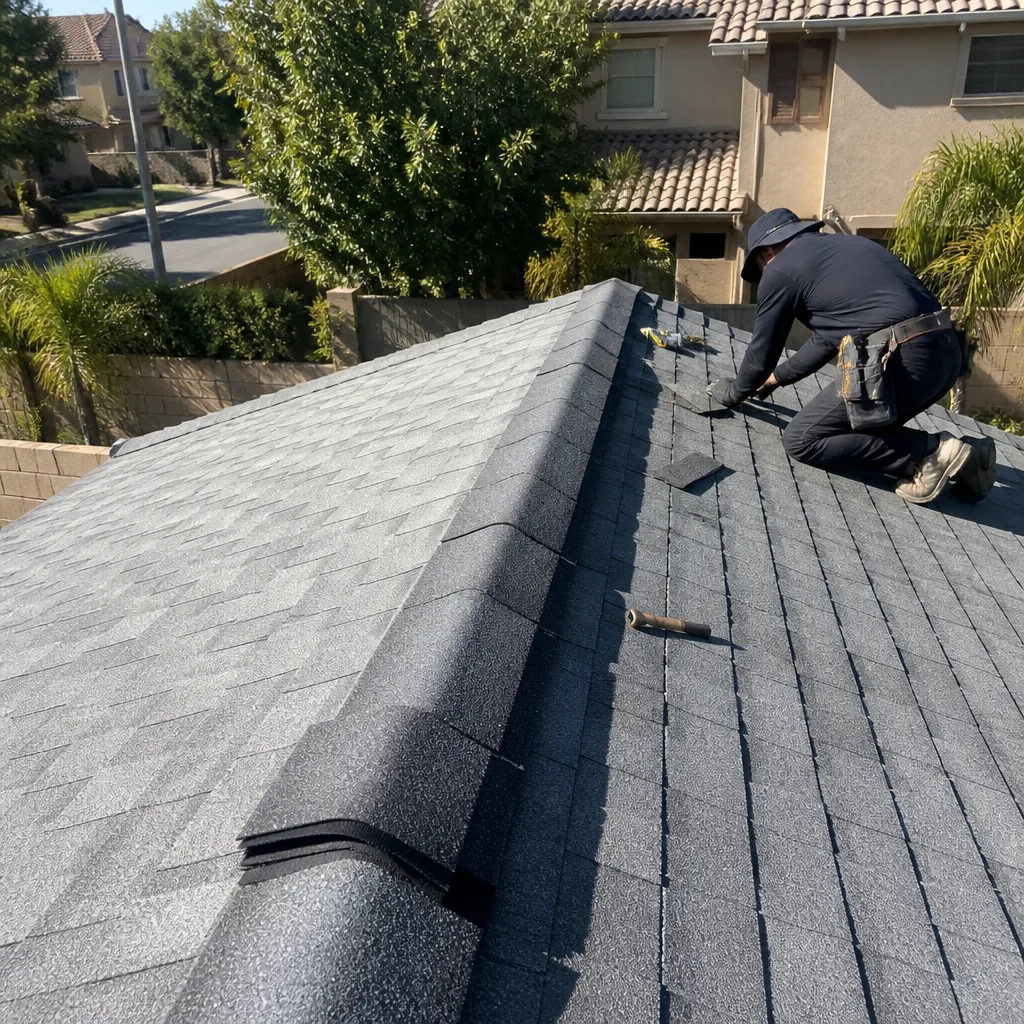 After
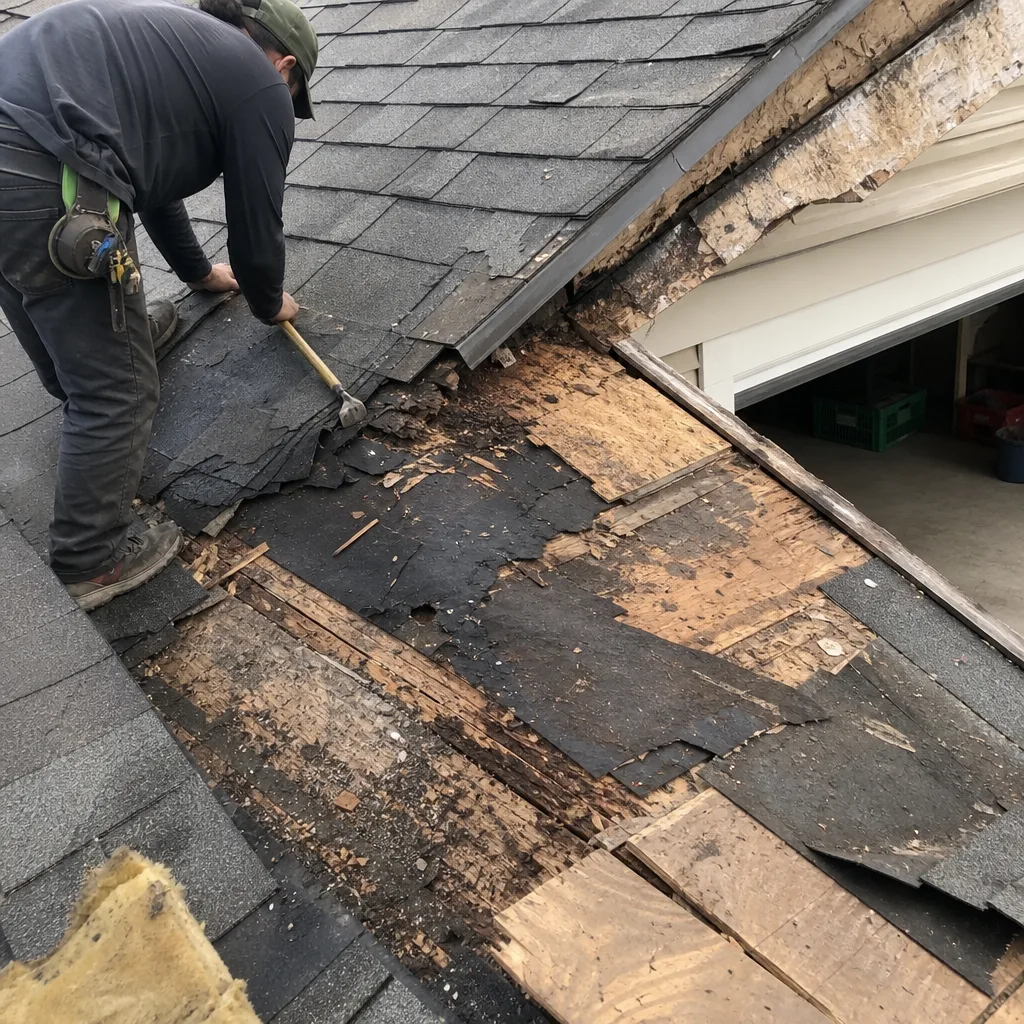 Before
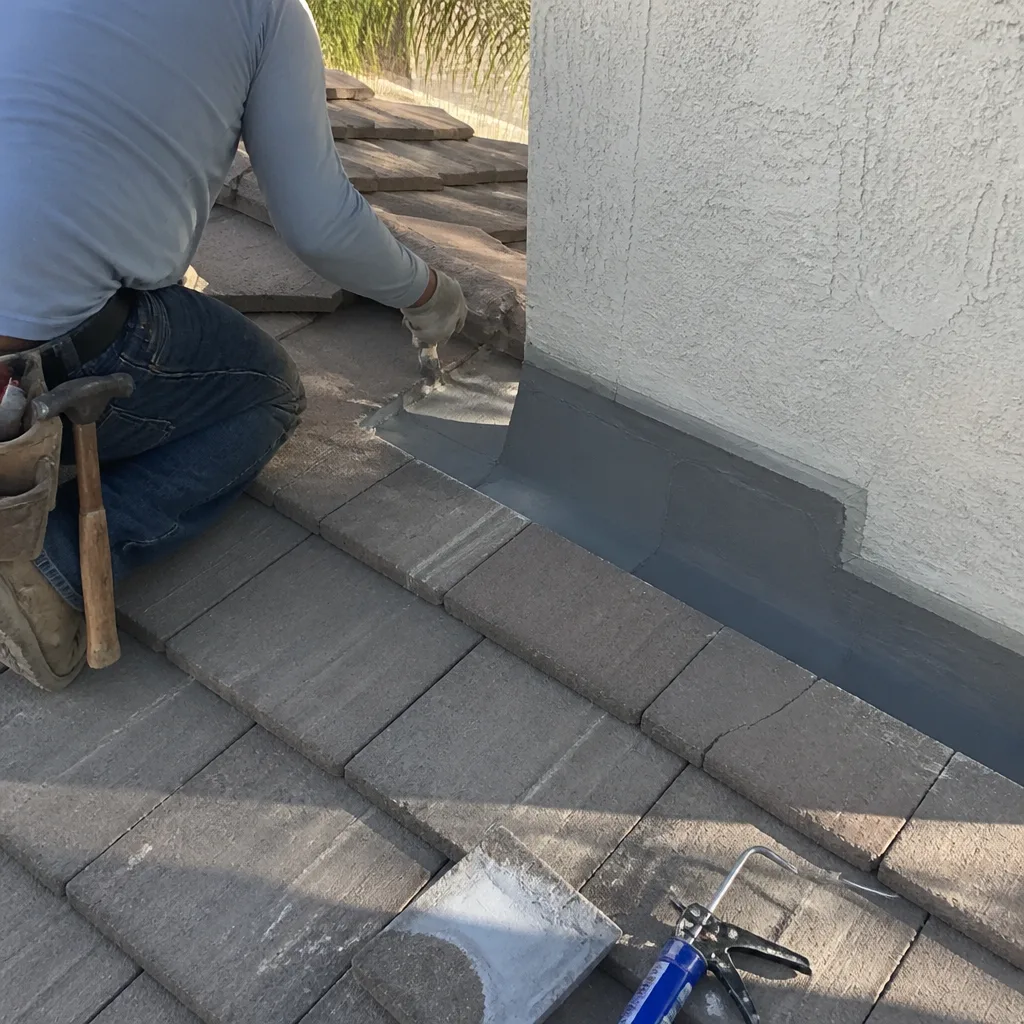 After